


Ongoing malaria transmission
Programme overview
Ongoing malaria transmission is the transmission of malaria that persists even after core malaria measures have been implemented.
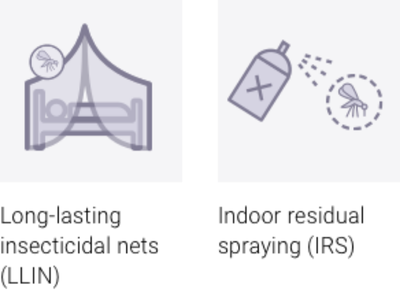
These measures include:
These measures include:
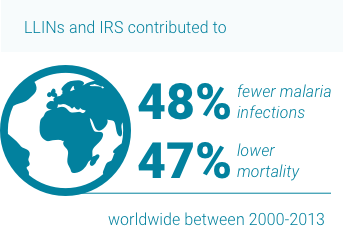
When implemented well, these interventions are highly effective against susceptible malaria vectors. LLINs and IRS contributed to a 48% reduction in malaria infection prevalence and 47% reduction in mortality worldwide between 2000 and 2013.
The five projects
Five research projects were selected and supported to provide the baseline evidence of ongoing malaria in selected settings.
.png?sfvrsn=28e089db_0 "VBD (2)")
Understanding sustainable malaria control and enhancement of elimination efforts in Africa (study sites in Kenya, Cameroon and Ethiopia).

Investigating magnitude and drivers of persistent Plasmodium infections in East and West Africa (study sites in Burkina Faso and Tanzania).
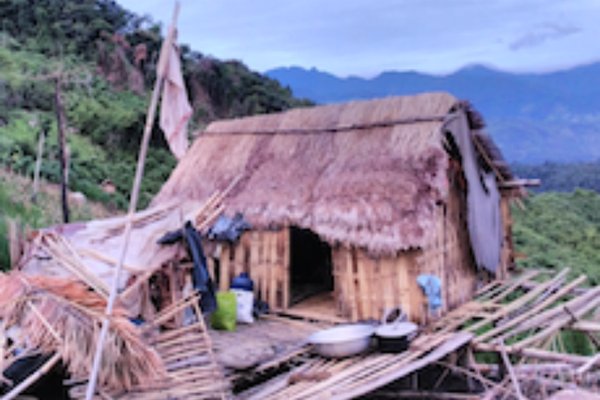
Greater Mekong Subregion (GMS) - Studies to examine magnitude and identify causes (study sites in Thailand and Vietnam).
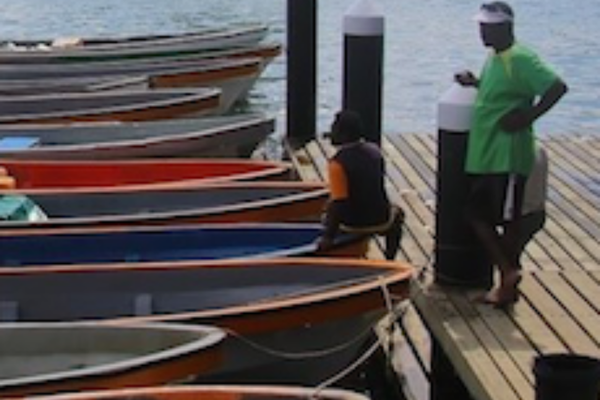
Understanding human, parasite, vector and environmental interactions in Papua New Guinea.

Ongoing malaria hotspots in Peru and Brazil: setting the stage for testing improved interventions.
The challenge
Malaria transmission can persist even when LLINs and/or IRS are effectively implemented and malaria vectors are susceptible to the insecticides used. This may be due to a combination of mosquito and human behaviours, such as:

Mosquitoes feeding before people go to bed and after waking up

Human activity away from protected houses and LLINs

Mosquitoes feeding outdoors
A clearer understanding of the magnitude of ongoing malaria will help to develop and optimize tools and strategies to address ongoing malaria in low- to high-transmission areas.
Programme aims and objectives
The important questions that the research aimed to answer:
- What is the contribution of ongoing transmission to the overall burden
- What are the causes of the ongoing malaria transmission?
To evaluate potential vector control options, it is critical to ascertain whether ongoing malaria transmission arises due to:
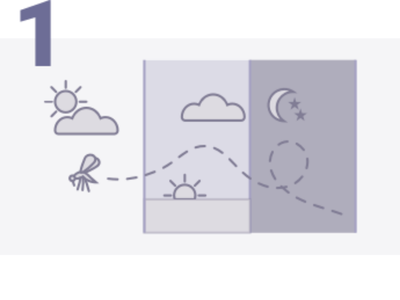
Mosquito resting and feeding behaviour (indoors vs. outdoors).
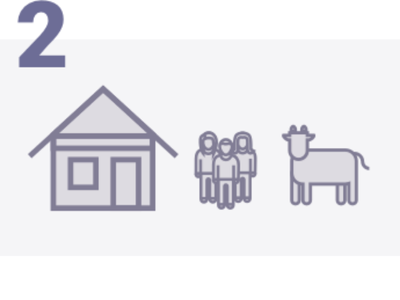
Feeding preferences (humans, domestic or wild animals).
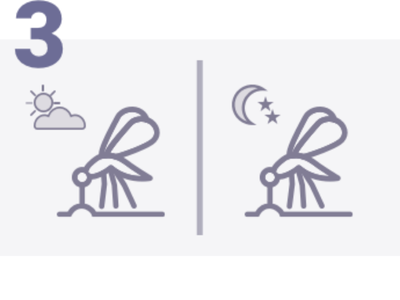
Mosquito biting behaviour (early morning vs early evening).
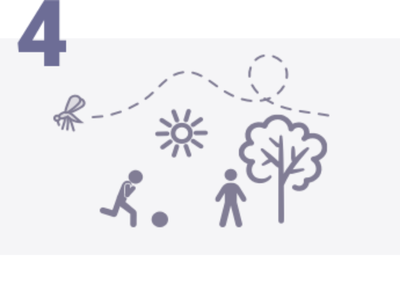
Interactions with human behaviour (habits, occupations & living places).
These studies will form the baseline scientific evidence for larger projects on more specific topics, including the impact of new vector control tools.
The objectives of the research programme:
- Produce updated data on the magnitude of ongoing malaria in low- to high-malaria transmission settings.
- Produce scientific evidence of entomological, social and environmental causes of ongoing malaria.
What is ongoing malaria transmission?
Malaria
Malaria is a life-threatening disease. In 2015, there were 212 million cases of malaria and 429 000 deaths (WHO, 2016).
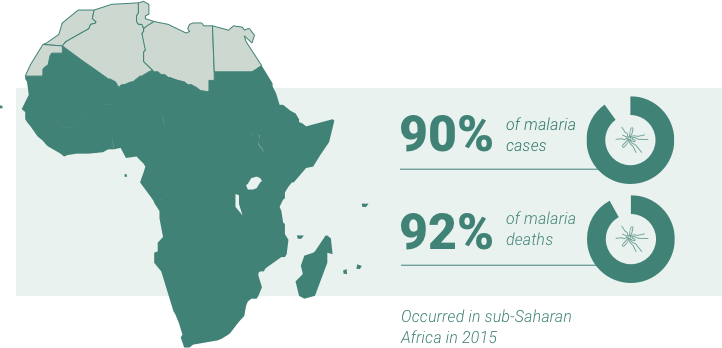
Most malaria deaths occur in sub-Saharan Africa; in 2015, the region was home to 90% of malaria cases and 92% of malaria deaths. However South-East Asia, Latin America and the Middle East are also at risk.
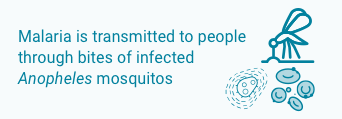
Malaria, caused by Plasmodium parasites, is transmitted to people when infected female Anopheles mosquitos, known as “malaria vectors”, bite them.
Ongoing malaria transmission
What is ongoing malaria transmission?
Vector control is the main way to prevent and reduce malaria transmission. Insecticide-treated nets (ITNs), particularly long-lasting insecticidal nets (LLINs), and indoor residual spraying (IRS), are widely effective forms of vector control.
Ongoing malaria transmission, formerly known as residual malaria transmission or RMT, is the transmission of malaria that persists even after universal coverage of these forms of vector control has been achieved.
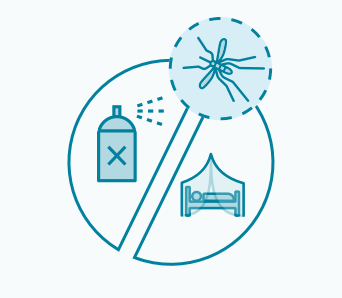
Ongoing malaria transmission results from behaviours that prevent vectors coming in contact with LLINs and IRS. These behaviours include:
Feeding outdoors
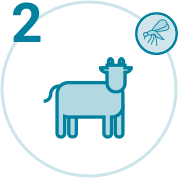
Animal feeding
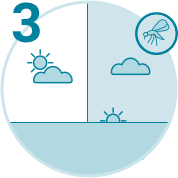
Feeding earlier and later in the day
Who is at risk?
Certain population groups have a much higher risk of contracting malaria and developing severe disease. These include infants, children under five years of age, pregnant woman, and people with HIV/Aids.
Those who are at increased risk of ongoing malaria transmission include:
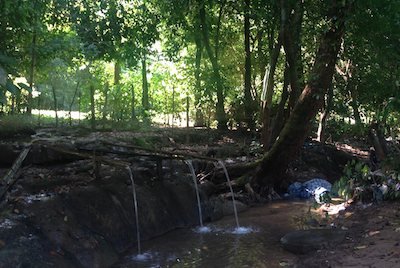
People who work in mines or forests, or those who have been displaced are also at risk because they may not be able to reside indoors where IRS has occurred or where LLINs are present.
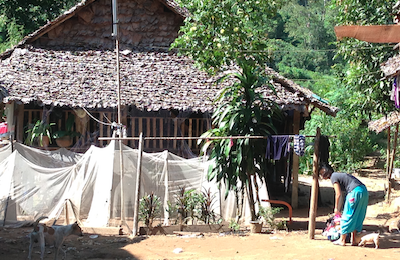
People who spend time outdoors (where they are not protected by LLINs) around dusk and dawn while mosquitoes are still feeding are at risk of contracting malaria.
Key Terms and Definitions
Anopheles: A genus of mosquito, some species of which can transmit malaria to humans
Exophagy: Tendency of mosquitoes to feed outdoors
Endophagy: Tendency of mosquitoes to blood-feed indoors
Exophily: Tendency of mosquitoes to rest outdoors
Endophily: Tendency of mosquitoes to rest indoors
Anthropophilic: Description of mosquitoes that show a preference for feeding on humans, even when non-human hosts are available.
Zoophilic: Description of mosquitoes that will feed on non-human animals as well as humans when both are available.
Insecticide treated nets (ITNs): Mosquito nets that repel, disable or kill mosquitoes that come into contact with the insecticide on the netting material.
Long-lasting insecticidal nets (LLINs): Factory-treated mosquito nets made of material into which insecticide is incorporated or bound around the fibres. The net must retain its effective biological activity for at least 20 WHO standard washes under laboratory conditions and three years of recommended use under field conditions.
Indoor residual spraying (IRS): Operational procedure and strategy for malaria vector control involving spraying interior surfaces of dwellings with a residual insecticide to kill or repel endophilic mosquitoes.
Principal (or primary) vector: A vector is an organism that transmits a disease-causing agent from reservoir to host. The principal vector is the species of Anopheles mainly responsible for transmitting malaria in any particular circumstance.
Secondary (or subsidiary) vector: Species of Anopheles thought to play a lesser role in transmission than the principal vector; capable of maintaining malaria transmission at a reduced level.
Human Blood Index (HBI): HBI indicates the proportion of mosquitoes that have fed on humans out of the total number of mosquitoes fed. It is used as an indicator of malaria vector biology, sometimes to estimate human biting habits or as a proxy transmission measure for malaria.
Human Biting Rate (HBR): The HBR is the average number of mosquito bites received by a human in a unit time, specified according to mosquito species (usually measured by human landing collection). It is calculated by multiplying the HBI by mosquito feeding frequency. It is an indicator of malaria vector biology.
Human landing catch (HLC): HLC is a method for collecting vectors as they land on individuals.
Entomological Inoculation Rate (EIR): EIR is the number of infective bites received per person in a given unit of time within a human population. Calculated by multiplying the number of mosquito bites per night (HBR) by the proportion of those bites which are positive for sporozoites. It is an indicator of malaria vector biology.
Sporozoite rate: The sporozoite rate is the percentage of female Anopheles mosquitoes with sporozoites in the salivary glands. It is an indicator of malaria vector biology and is expressed as a percentage.
Support
This work is financially and technically supported by TDR, the Special Programme for Research and Training in Tropical Diseases. Technical support is also provided by the World Health Organization Global Malaria Programme. UK Aid also provides financial support.
Additional technical collaborators involved in the studies are indicated on the partners page.