Ongoing malaria hotspots in Peru and Brazil: setting the stage for testing improved interventions

Ongoing malaria hotspots in Peru and Brazil: setting the stage for testing improved interventions

Overview

Why this project?

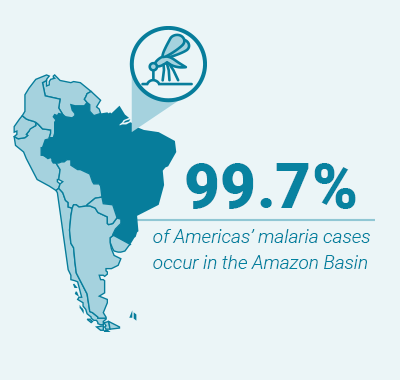
The greatest proportion of malaria in the Americas is located in the Peruvian and Brazilian Amazon Basin. Of the 143 500 malaria cases recorded in Brazil in 2015, 99.7% of them were acquired in the Amazon Basin.

-peru-brazil-overview-why-this-project-mosquito-2809
-peru-brazil-overview-why-this-project-map-2809
peru-and-brazil-overview3
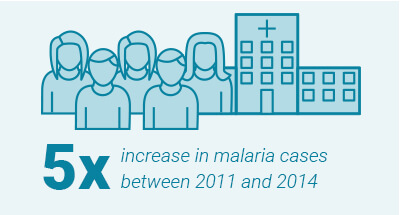
Between 2011 and 2014, Loreto Department, which accounts for 94% of the Peruvian malaria burden, reported a five-fold increase in malaria cases.

The aim

This study aimed to find out more about ongoing malaria transmission in two different hotspots in the Peruvian and Brazilian Amazon. This is being done to strengthen strategic measures against malaria. This project sought to evaluate the following:

peru-and-brazil-overview-aim1
peru-and-brazil-overview-aim2
peru-and-brazil-overview-aim3

Objectives

peru-and-brazil-overview-objectives1
To compare prevalence/ incidence of parasitemia among households with and without bed-net use, such as insecticide-treated nets (ITNs) and long-lasting insecticidal net (LLINs), and with/without indoor residual spraying (IRS).
peru-and-brazil-overview-objectives2
To determine vector biology metrics, quantify environmental variables of aquatic mosquito habitats and genetically characterise immature and adult Anopheles darlingi along the Mazán and Napo Rivers (Loreto Department, Peru) and in Mâncio Lima (Juruá Valley, Brazil).
peru-and-brazil-overview-objectives3
To assess the socioeconomic, behavioural, and environmental determinants of ongoing malaria through a combination of household surveys and satellite imagery.

Innovation in malaria research

The research sites

Peru

The project is located in four villages with an Annual Parasitological Index greater than 10, in two different riverine areas in the Mazán District of Loreto Department. Salvador and Urco Miraño are located along the Napo River; Libertad and Visto Bueno are located along the Mazán River. Malaria in this district has an unstable epidemiological pattern and seasonal behaviour, with a peak between May and August, unlike other nearby areas where the peak of transmission takes place between March and June. This area has been defined as a hotspot of disease transmission, and is associated with human activities.

Brazil

This project is located in the town of Mâncio Lima in Juruá Valley. The main local malaria vector is the highly anthropophilic and mostly exophilic Anopheles darling; however, An. albitarsis s.l. larvae are also abundant in both natural and man-made water bodies across the town (Reis et al., 2015).


-peru-brazil-overview-research-sites-mapbrazil_0210

Orthomosaics

Orthomosaics for Salvador, Urco Miraño, Visto Bueno and Mâncio Lima were created. The orthomosaic for Libertad is still in progress.

Key Findings

The key findings below relate to Objective 3: to determine vector biology metrics, quantify environmental variables of aquatic mosquito habitats and genetically characterise immature and adult Anopheles darlingi along the Mazán and Napo Rivers and in Mâncio Lima.

Results related to Objectives 1 and 2 are pending analysis and are dependent on the detailed maps of malaria case distribution per village (which are currently in progress).

The findings will be used in order to identify local indicators of malaria transmission, calculate and interpret local malaria transmission factors, and generate evidence for improvement of control measures, adjusted to local patterns of residual malaria transmission (RMT).

Peru

1. An. darlingi was the most common species

  • An. darlingi was the most abundant species of mosquito collected in each of the sites.
  • The infectivity rate (IR) of about 6,300 An. darlingi was approximately 1.6% (for Plasmodium falciparum and Plasmodium vivax). The Entomological Inoculation Rate (EIR) was higher in Mazán River villages.

2. Similarities and differences in vector behaviour between the Napo and Mazán Rivers

  • Villages located on the Mazán River presented greater abundance of An. darlingi, a higher An. darlingi Human Biting Rate (HBR), Entomological Inoculation Rate (EIR), and a higher Human Blood Index (HBI) than those on the Napo River, with a common abundance peak in June.
  • The information obtained so far supports other findings at the epidemiological level (Carrasco-Escobar et al, 2017), which show different malaria transmission patterns between the Napo and Mazán Rivers.
  • In general, however, mosquito populations were more exophilic (prefer to be outdoors) and exophagic (prefer to feed outdoors) in the Napo and Mazán river basins.

3. Similarities and differences in larvae between the Napo and Mazán Rivers

  • There was bacterial diversity in larvae of An. darlingiAn. triannulatus s.l., and An. rangeli; in particular, greater differences in microbiota were found between the larvae of different anopheline species than between water bodies.
  • More anopheline larvae (approx. 75% of 856 larvae collected) were present in water bodies within one kilometre of villages on the Napo River than in water bodies within one kilometre of villages on the Mazán River.

Brazil

  • None of 190 An. darlingi collected in February 2017 and tested for Plasmodium infectivity with reverse transcription polymerase chain reaction (RT-PCR) were infected. Approximately 550 additional An. darlingi adult samples from the remaining months are currently being tested.
  • Analyses are in progress for the 68 water bodies that were characterised and 8 080 Anopheline larvae that were collected from them between February and May 2017.

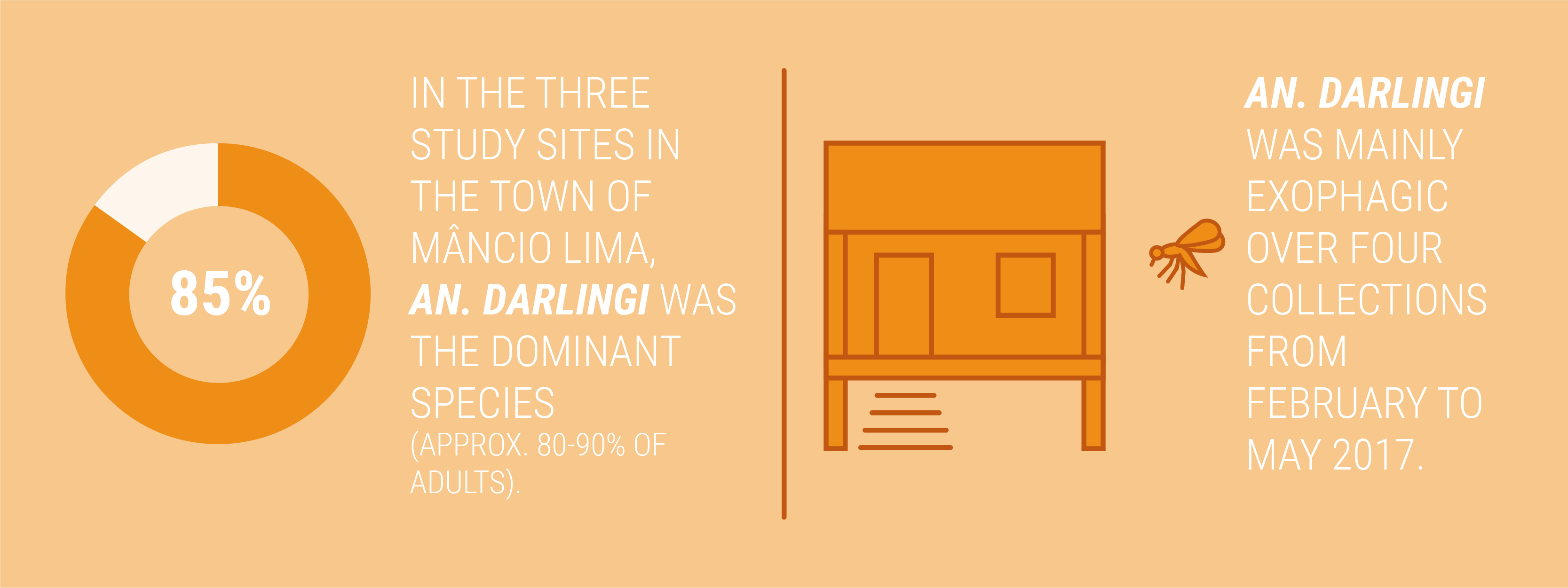
  • An. darlingi was mainly exophagic over four collections from February to May 2017.

Research Components

Sociological and Epidemiological Components

Objective

To compare prevalence/incidence of parasitemia among households with and without bednet use and with/without Indoor Residual Spraying (IRS) and to assess socioeconomic and human behavioural determinants of residual malaria, interviews were conducted and malaria morbidity data was collected.

Methodology

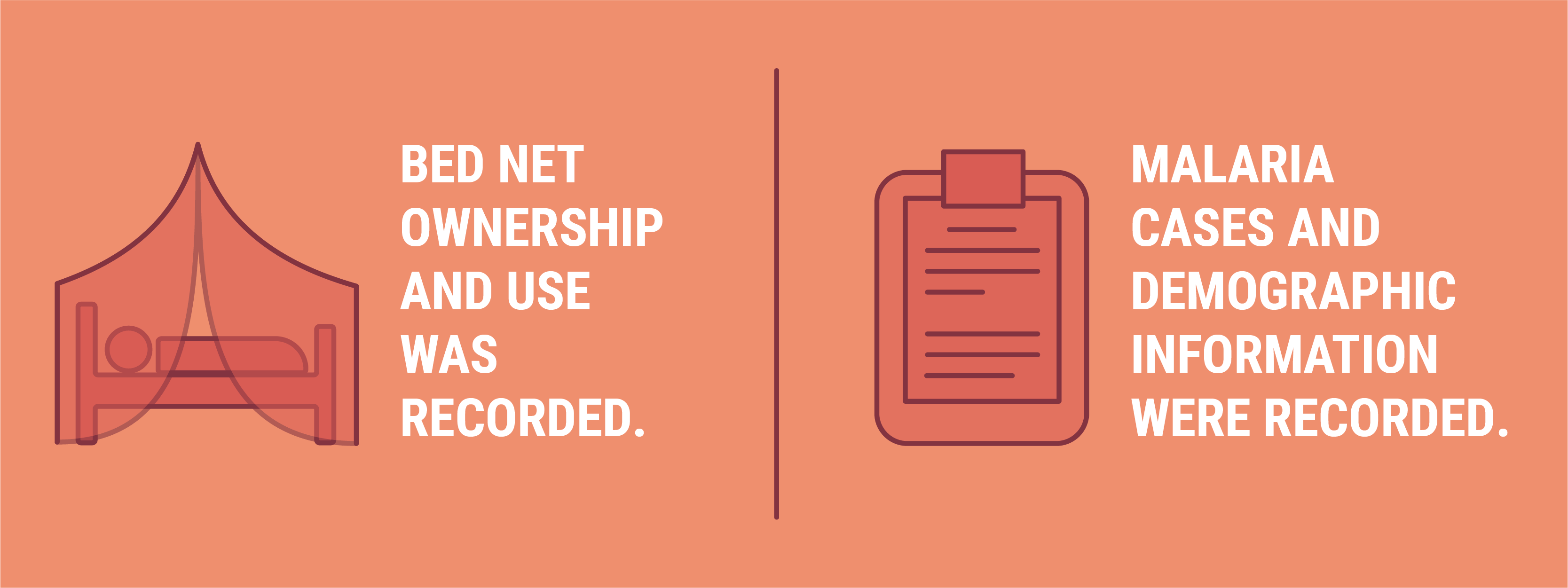
  • Household surveys (Knowledge, Attitudes and Practices (KAP) surveys and epidemiological surveys) were conducted with tablets using a structured questionnaire programmed in CSPro Software. These interviews collected information on participants enrolled, such as age, sex, relationship to the head of the household, and ownership and use of mosquito bed-nets.

  • Reported malaria cases were recorded, and malaria prevalence for the communities along the Mazán and Napo rivers was estimated using data from 2015 and 2016.

Findings: Brazil

  • The malaria morbidity dataset comprised 4 926 slide-confirmed malaria episodes that were diagnosed in 2 623 residents of Mâncio Lima, who were distributed in 1 432 households. The distribution of malaria episodes per study subject was clearly overdispersed, ranging between 0 and 12.

  • Of the malaria episodes in Brazil, 4 219 (85.6%) were due to P. vivax, 644 (13.1%) were due to P. falciparum and 65 episodes (1.3%) to both species

Findings: Peru

  • Bed-net coverage in the four Peruvian villages in 2016 ranged from 40% in Visto Bueno to 55% in Salvador; these statistics included both impregnated and non-impregnated nets.

Entomological Component

Objective

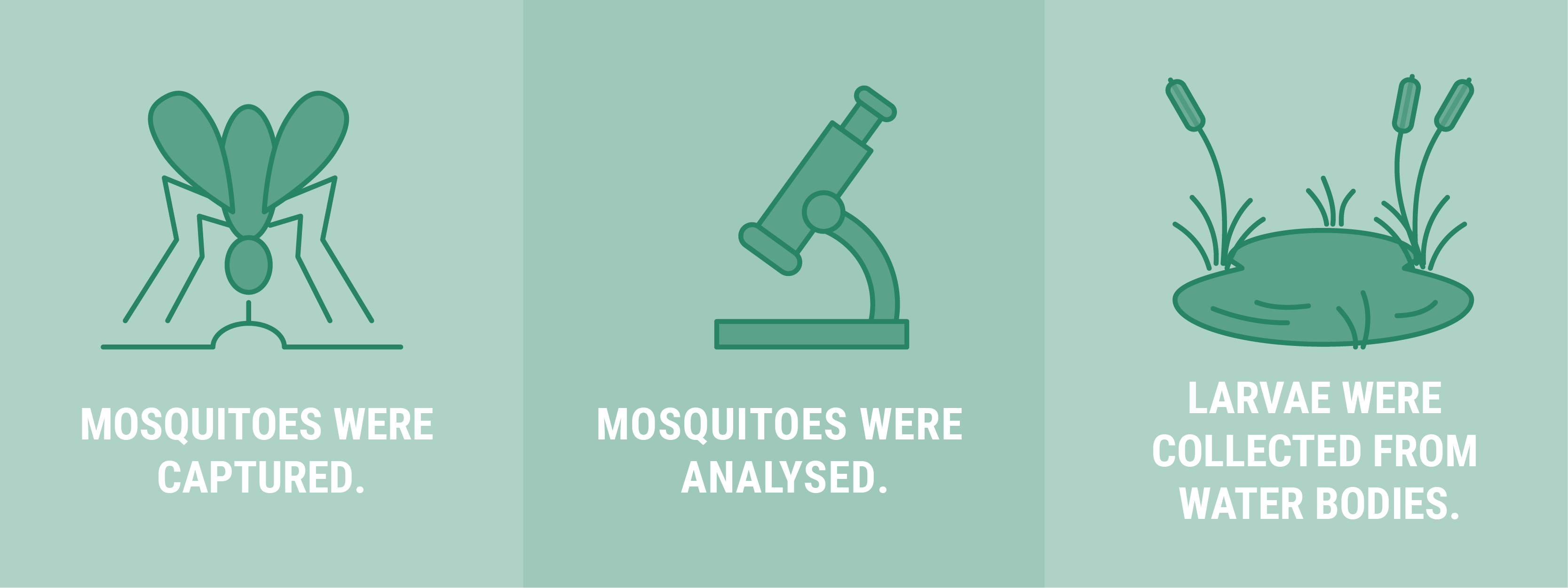
To determine vector biology metrics and characterize An. darlingi and its habitats in the Amazon, adult mosquitoes and larvae were collected, identified and analysed.

Methodology

  • Adult mosquitoes were collected using human landing catches (HLC) and the barrier screen methodology.
  • Adult mosquitoes were initially identified morphologically; most of the non-Anopheles darlingiare currently being identified using molecular techniques (restriction-fragment-length polymorphism-ITS2 and sequences of the barcode region).

  • Adult mosquitoes were analysed in the laboratory to determine whether they were infected with malaria parasites P. falciparum and/or P. vivax and to determine their blood meal source (humans or animals).

  • Larvae were collected and analysed together with physical-chemical characteristics of all water bodies within one kilometre of each village.

Results: Mosquito behaviour

  • An. darlingi was the most abundant species in each of the Peruvian and the Brazilian localities.
  • Peruvian villages located in the Mazán River presented higher mosquito abundance, higher An. darlingi Human Biting Rate (HBR), Entomological Inoculation Rate (EIR), and higher Human Blood Index (HBI) (greater proportions of human blood meals) than those in the Napo River. All of the villages have a common abundance peak in June, which is malaria transmission season.

  • Mosquito populations were more exophagic in all localities in both Peru and Brazil.

  • Other anopheline species identified in Peru were An. nr konderi (An. oswaldoi s.l.), Anopheles dunhami, and An. triannulatus s.l.

  • Of the approximately 6 300 An. darlingi examined, 1.6% were infected with the malaria parasite (Plasmodium falciparum and Plasmodium vivax).

  • The Entomological Inoculation Rate (EIR) was higher in Mazán River villages.


Results: Mosquito larvae

  • All larvae from Peru and Brazil localities are being identified molecularly.
  • Researchers plan to georeference malaria case data, human population data, and larval aquatic habitat data for all localities. This will allow researchers to determine any association between hotspots of cases, An. darlingi larval aquatic habitat environmental characteristics, and larval aquatic habitat distance from hotspot houses.

  • In Peru, microbiota signatures were specific for the larvae of different anopheline species, not for different water bodies.

Data analysis of some results is still being conducted.

Geo-spatial Component

Objective

To assess environmental and vector behavioural factors in ongoing malaria transmission, larval aquatic habitats were mapped with drone footage and analysed, while and malaria cases were georeferenced.

Methodology

  • Drones and satellite data were used to create high-resolution maps of larval aquatic habitats.
  • Spatial distribution, physico-chemical and biological characterisation of water bodies located up to approximately one kilometre from each village were performed. Anopheles larvae were collected from permanent and temporary water bodies. The ecological and chemical compositions of Anopheles aquatic habitats were analysed.

  • All households and reported malaria cases were georeferenced, and maps were created.

Innovation in malaria research

Drones were used to take high-quality images of vector habitats during different seasons and in different areas where people work and live. This is a novel approach in malaria research; a journal article is expected to be published on this topic by the end of the year.

The large set of images produced by the drone camera allowed the researchers to construct maps with a spatial resolution of 0.1 metre per pixel. As mapping with drone footage is a relatively new methodology, some adjustments will be needed, such as improving photo aligning, specifically in some Peruvian sites.

Mapping water bodies

Conventional and multispectral images, showing both the biological and physio-chemical compositions of water bodies, were collected in Peru and Brazil. These images were used to identify and characterise the aquatic habitats of immature mosquitoes (larvae and pupae). The combination of both types of images will allow researchers to determine if there is a difference between the spectral signature of water bodies with and without An. darlingi larval aquatic habitats.

Data analysis of some results is still being conducted.

Research Uptake

Key Audience:

Government Ministries

This is an important period for the Ministry of Health in Peru, as they have recently released a document on malaria interventions. It is therefore an especially crucial time for the Ministry to see this research.

Plan Zero Malaria

The technical committee (composed of members Alejandro Llanos, Dionicia Gamboa, Martin Casapia, Cesar Cabezas and Keith Carter) meets regularly with the technical team from Plan Zero Malaria in Iquitos (composed of members Graciela Meza, Christiam Carey, Hugo Rodriguez and Raul Chuquiyauri).

Local communities

The researchers will meet with local health workers in the communities and in the region before the end of the year to explain the results of the study.

Publications and Other Resources

Videos

Publications

Saavedra MP, Conn JE, Alava F et al. (2019) Higher risk of malaria transmission outdoors than indoors by Nyssorhynchus darlingi in riverine communities in the Peruvian Amazon. Parasites Vectors 12, 374 https://parasitesandvectors.biomedcentral.com/articles/10.1186/s13071-019-3619-0

Carrasco-Escobar G, Manrique E, Ruiz-Cabrejos J et al. (2019) High-accuracy detection of malaria vector larval habitats using drone-based multispectral imagery. PLoS Neglected Tropical Diseases 13(1): https://journals.plos.org/plosntds/article?id=10.1371/journal.pntd.0007105

Prussing C, Saavedra MP, Bickersmith SA et al. (2019) Malaria vector species in Amazonian Peru co-occur in larval habitats but have distinct larval microbial communities. PLoS Negl Trop Dis 13(5):https://doi.org/10.1371/journal.pntd.0007412

Bickersmith S, Prussing C, Moreno M et al. (2018) Nyssorhynchus dunhami: bionomics and natural infection by Plasmodium falciparum and Pvivax in the Peruvian Amazon. Memórias do Instituto Oswaldo Cruz. 113.

Title: Population genetics of immature and adult Nyssorhynchus darlingi in the Brazilian Amazon Region

Abstract: Population genetics studies of tropical diseases vectors can illuminate aspects of population structure that could lead to new interventions to reduce pathogen transmission. Nowadays, the generation of genetic markers is a bottleneck since most of the vectors are not model organisms with available whole genome sequences and often it is necessary to employ a high number of markers to investigate sympatric populations. The recent development of next generation sequencing (NGS) technology in association with restriction enzyme techniques has provided different methodologies to generate such markers. Genotyping by sequencing (GBS) and RAD-Seq (Restriction Associated DNA sequencing) are technologies that have great potential. We report here a novel optimized approach for a low-density DNA sequencing technique that uses transposases to generate whole genome libraries for NGS. The protocol is adapted to use as little as 200pg of DNA per specimen. The technique was used successfully on larvae of anopheline mosquitoes collected in the Amazon of Peru or Brazil and generated two different groups of data: whole mtDNA sequences; and SNPs from nuclear DNA. Whole mtDNA sequences were used for taxonomic identification of the larvae, detecting a majority of Nyssorhynchus darlingi specimens, but also the presence of Ny. rangeliNy. triannulatusNy. konderiAn. mattogrossensisNy. oryzalimnetesNy. dunhami, and An. costai. With Nyssorhynchus darlingi it was possible to observe the presence of both northern and southern mitochondrion haplotypes. We obtained 568 polymorphic sites from nuclear DNA that were used to study isolation by distance of larvae from different breeding sites and we observed high migration between these sites. The methodology described here was efficient in the generation of genetic markers (either from mtDNA and nuDNA) that are affordable and high throughput, to study population genetics of malaria vectors at Amazon Basin.

Title: Using low density DNA sequencing to access genetic variability on Nyssorhynchus darlingi

Abstract: Nyssorhynchus darlingi represents the major malaria vector in the Amazon basin. Behavioral traits modified by changing environments might represent an increase in the complexity of its role as a Plasmodium vector. Until now, it is not known if different behaviors such as flight dispersal, time of blood meal intake, or preference to enter houses are linked to the genetic background of the mosquito. In order to study this possible association, we performed mosquito genotyping of Nyssorhynchus darlingi populations in Mâncio Lima (Acre, Brazil) collected from different ecological niches. Each mosquito was genotyped by low-density whole genome sequence and SNPs from nuclear DNA were generated to assess the samples. A total of 1,237,435 SNPs were generated and a portion of them were used to compare larvae and adults, adults collected inside and outside the houses, and adults collected at different periods during the night. Results showed high dispersal among breeding sites around houses. There was no correlation between breeding sites or preference to enter houses and time of biting. Therefore we suggest that the capacity to enter the house and biting time are behaviors associated with the mosquito genetic background. The understanding of the genes related to these behaviors could lead to a more comprehensive analysis of vector structure and possibly new tools to reduce malaria transmission.

Title: Nyssorhynchus darlingi in artificial breeding sites in a high urban malaria transmission area, Vale do Jurua, Brazilian Amazon

Abstract: Knowledge of vector biology is essential to design controls strategy for mosquito-borne disease and, to this end, entomological research in high-risk areas is fundamental to understanding disease dynamics, such malaria in the Amazon Region. In the last existing tropical biome, the Amazon, with great resource capacity (water, energy, minerals, biodiversity), is the Vale do Jurua, an important example of how malaria has emerged and is being maintained regionally. The municipalities of the Vale do Jurua created an economic development plan to increase family income via the construction of fishponds, that had the unintended consequence of opening artificial larvae habitats for anopheline species, particularly for the dominant malaria vector Ny. darlingi. The present study shows an entomological profile for larvae and adults from the rainy to dry season (February through September), for three independent landscapes in Mâncio Lima city, Acre state. From a total of 336 valid fish ponds analyzed during six months, 10,665 larvae were collected of which 49.36% corresponded to L2, L3 and L4 stages, and Ny. darlingi represented 8.6% of these three stages. Variables correlated with the presence of Ny. darlingi included aquatic vegetation, permanent water body, and active fish ponds. Temperature restricted the presence of Ny. darlingibut other independent variables had no effect (pH, conductivity, turbidity, shade). Ny. darlingi larvae proportion (numbers/total larvae identified) and abundance/pond had a seasonal effect, suggesting a contribution of fish ponds to the maintenance of the dominant vector population. This feature of the dynamics of Ny. darlingi can provide insights into integrated control.

News

Workshop on Residual Malaria, Iquitos, Peru

30 April 2019 - 3 May 2019

This workshop is an opportunity for researchers to share their key findings from six projects investigating residual malaria and insecticide resistance in various epidemiological and ecological settings in 10 countries in Africa, South-East Asia, South America and in the Western Pacific region. Bringing together researchers, ministers, policymakers, experts and partners, the event will help the countries to develop new strategies and tools that are context-specific for addressing residual malaria in local communities.

This is the second iternational workshop intended for results to be shared among the researchers. The first meeting was hosted by hosted and suppoorted by the Ifakara Health Institute in November 2017 in Dar-es-Salam, Tanzania.

The workshop in Iquitos will involve:

  • Presentions of main scientific findings around malaria transmission patterns in various local contexts
  • Discussions of plans to implement and deploy new approaches for preventing and controlling malaria transmission
  • Providing guidance options for development of taregted malaria control tools
  • Providing baseline information to inform potential future research and training proposals, and standardized protocols for future research.

The workshop will include presentations by each of the prinicipal investigators to share their research findings. Implementation plans for new strategies and tools against residual malaria will also be presented and discussed in seperate sessions.

Plenary lectures will also be delivered on the following topics:

  • The Malaria Situation in the Americas by Dr Alejandro Llanos-Cuentas, Emeritus Professor at UPCH and PMC advisor.
  • Vectorbase.org Data Base by Dr Gloria Giraldo


"We will help the researchers and representatives of the national programmes to make the best use of these findings, with the objective to better control malaria in the specific locations in which the studies were made." - Dr Florence Fouque

On the 2nd May, there will be a field visit to Lupuna, a community 40 minutes away from Iquitos by boat. During this event, participants will visit the health centre to interiew health workers and community members. There will also be a demonstration of the activities conducted for the residual malaria project in Peru and Brazil (e.g. use of barrier screens and drones).

The workshop will close with team meetings to finalize and discuss the budgets for the implementation plans in the different settings. These plans will be presennted in a final summary presentation before the closing of the workshop.


The Team

Image 2025-12-04 at 11.15
Dr Dionicia Gamboa Project PI. Molecular biologist and associate professor at the School of Science and Philosophy, Universidad Peruana Cayetano Heredia, and the Malaria Lab coordinator.
Image 2025-12-04 at 11.15 (3)
Dr Marta Moreno Co-PI. Vector biologist and Research Associate at University of California San Diego. Current affiliation: London School of Hygiene and Tropical Medicine.
Image 2025-12-04 at 11.15 (1)
Dr Gabriel Carrasco-Escobar Data manager and spatial epidemiologist and lead researcher on satellite and drone imagery to assess Ny. darlingi ecology. Lecturer at Universidad Peruana Cayetano Heredia, School of Science and Philosophy.
Image 2025-12-04 at 11.15 (2)
Kate Prussing PhD student in Jan Conn’s lab studying the ecology and population genetics of the malaria vector Ny. darlingi in the Amazon.
Image 2025-12-04 at 11.15 (4)
Paulo Rufalco Moutinho Collected mosquito larvae and was involved in adult mosquito collections. Paulo arranged all the field work.
Image 2025-12-04 at 11.15 (5)
Samir Kadri Collected adult mosquitoes and conducted laboratory work, primarily working on DNA extractions, library constructions and sequencing.
Image 2025-12-04 at 11.14
Diego Peres Alonso Organised all trips to Acre, participated on adult collections, developed methodology on mosquito genotyping and did part of the laboratory work.
Image 2025-12-04 at 11.21
Dr Jan E. Conn Dr Jan E. Conn is a Research Scientist at the Wadsworth Center, NYSDOH, Albany, NY, and Professor in Biomedical Sciences Department at SUNY-Albany.

Collaborating Partners

Donor

This work is financially and technically supported by TDR, the Special Programme for Research and Training in Tropical Diseases. Technical support is also provided by the World Health Organization Global Malaria Programme.

Collaborators

  • Universidad Peruana Cayetano Heredia (Lima, Peru)
  • University of California San Diego (CA, USA)
  • Institute of Biomedical Sciences, University of São Paulo (São Paulo, Brazil)
  • Harvard T.H. Chan School of Public Health (MA, USA)
  • Wadsworth Center, New York Department of Health (NY, USA)
  • Biotechnology Institute and Institute of Bioscience, São Paulo State University Botucatu (São Paulo, Brazil)
  • Instituto de Medicina Tropical Alexander von Humboldt, Universidad Peruana Cayetano Heredia (Lima, Peru)
  • Translational Research Development for Endemic Infectious Diseases of Amazonia (2D43TW007120-11A1), Fogarty International Center

Contact Details

Principal investigator: Dr. Dionicia Gamboa Vilela

Faculty of Science and Philosophy and Instituto de Medicina Tropical “Alexander von Humboldt”

Universidad Peruana Cayetano Heredia

Lima, Peru

Tel/Fax: +51-1-3190000, ext. 2712

Email: dionicia.gamboa@upch.pe