


VBDs in vulnerable and hard-to-reach populations: Malakit
Project overview
Why this project?
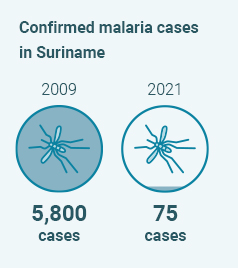
National and regional efforts to eliminate malaria in the Guiana Shield (Suriname, Brazil and French Guiana) have led to a significant reduction in the disease in the last decade.
However, some remote and hard-to-reach populations in the region remain susceptible to malaria. These populations include gold miners and migrants within and along the border areas of Suriname, who illegally mine gold in remote regions of the Amazon rainforest. These groups remain at risk of developing drug resistance as a consequence of incorrect self-diagnosis and under-the-counter medication. They also therefore risk spreading malaria in previously controlled areas.
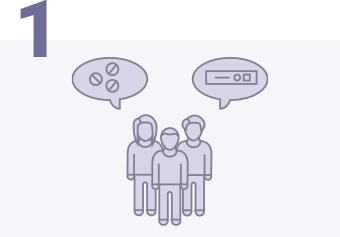
Barriers to correct treatment in at-risk groups:
.jpg?sfvrsn=7e177319_0 "malaria-2-1646374913 (1)")
The ability to reach these groups and encourage adherence to malaria diagnosis and treatment plays a crucial part in eliminating malaria in the region and ensuring that no drug-resistant strains develop.
To make adherence to Malaria diagnosis and treatment more accessible, the Centre Hospitalier de Cayenne in French Guiana, in collaboration with the Foundation for scientific research (SWOS) in Suriname and the Foundation Oswaldo Cruz (Brazil), developed a simple and effective detection and treatment kit, called the Malakit. The introduction of the kit was part of the Malakit Project, whose aim is to evaluate this innovative malaria control strategy among illegal gold miners in French Guiana.
What is the Malakit?
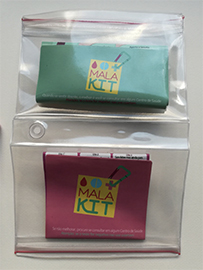
The Malakit comprises a lightweight, waterproof, easy-to-transport plastic pouch containing three malaria rapid diagnostic tests and a full course of antimalarial treatment. The kit therefore contains all the equipment and resources needed to handle an episode of malaria, alone in an isolated location.
The kit was first tested between 2018 and 2020 along the Guiana Shield border regions. First results of this tri-national pilot showed that:

These encouraging results have prompted new research into how to enhance the effectiveness of the Malakit before deploying it in a wider population.
The aim
Increased and more efficient use of the Malakit is a vital step towards eliminating malaria in the region, and preventing the development of drug-resistant strains.
This project, co-supported by The Special Programme for Research and Training in Tropical Diseases (TDR), aims to ensure that:
- The importance of the Malakit is understood by the mobile gold mining population
- The Malakit is used correctly and consistently by this group

Objectives
The objectives of the research project are:
To understand the current behaviours and perceptions around malaria detection, treatment and drug resistance among the target populations, and to improve their knowledge of these topics.

To tailor existing training tools for facilitators/ community health care workers and generate new material that is better suited to meet the needs of these populations.
To identify and address challenges in distributing the Malakit and establish an implementation basis to optimise its use in the future.
To continue to build sub-regional and global networks that facilitate communication and collaboration in managing and eliminating residual malaria in the region.
The research sites
This research project is being conducted at the local Malaria Programme of Suriname facilities, located in Albina, Antonio do Brinco, Ronaldo and Peruano sites, and Paramaribo.
Albina
The facility in Albina is located in a resting site for gold miners who work on the border river, or in mining areas in French Guiana.
Paramaribo
Paramaribo is the capital city of Suriname. Here, a Malaria programme clinic (TropClinic) provides low-threshold* treatment, targeting mobile migrant populations coming from both Surinamese and French mining areas.
Antonio do Brinco, Ronaldo and Peruano
In the Antonio do Brinco, Ronaldo and Peruano sites, gold miners and their service providers from French Guiana acquire necessary equipment and trade gold.
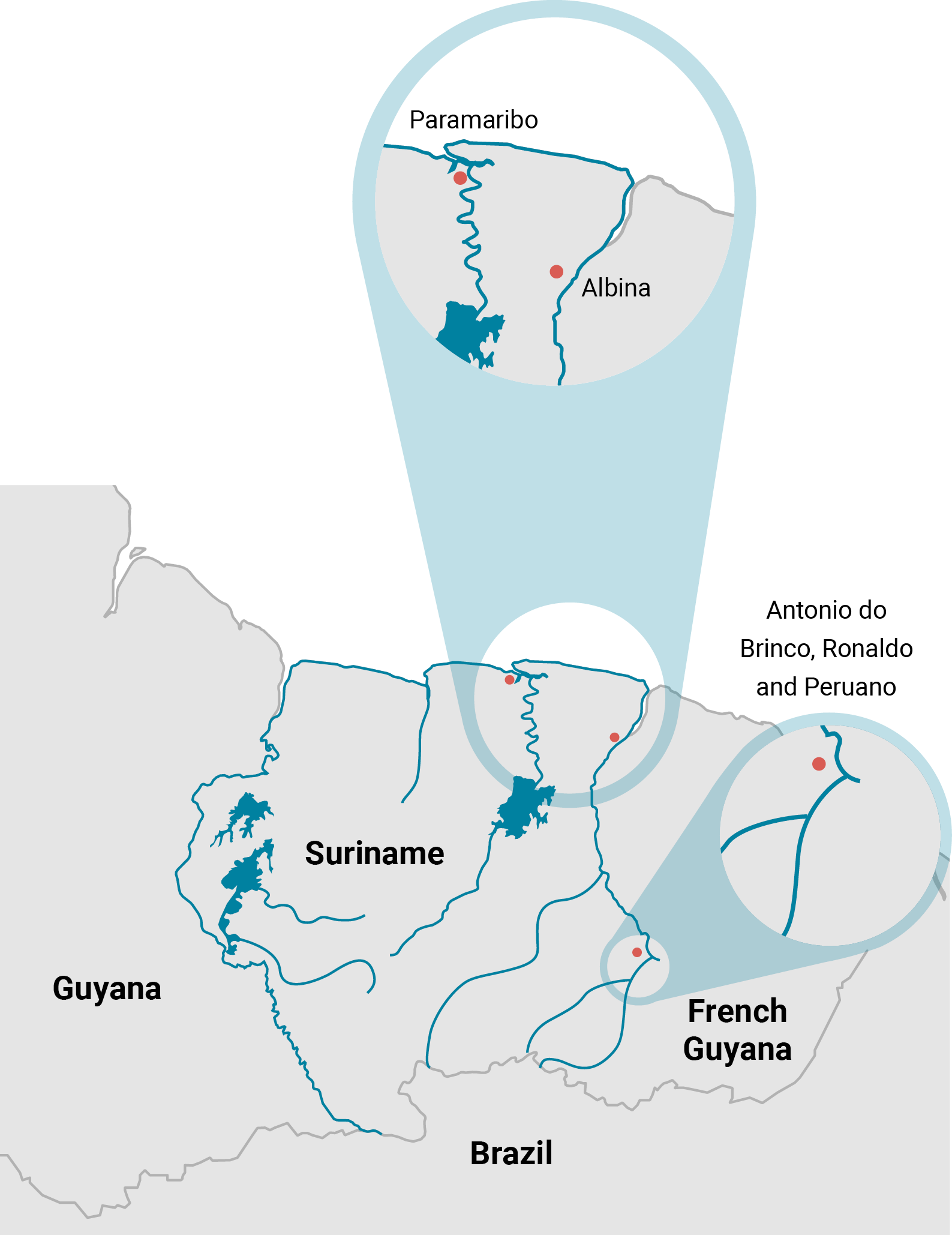
*Low-threshold clinics offer health services while making minimal demands on the patient. This offers a more approachable environment for at risk populations like illegal migrants.
Research components
Overview
This research project stems from the development of the Malakit, as well as from previous researches highlighting the prevalence of residual malaria in migrant gold mining populations.
Overall the project aims to improve the understanding of malaria drug resistance among the gold miner population, address current challenges in distributing Malakit and foster discussion on managing residual malaria in target populations in the region.
Sociological component
Objectives
- To identify the level of knowledge and understanding of malaria and its treatment amongst gold mining communities in the project area
- To identify the barriers that undermine uptake and adherence to the Malakit intervention
- To tailor and generate educational tools and materials through a community-based approach
Methodology
- Qualitative research is being conducted to assess the level of knowledge regarding malaria treatment and the levers and barriers to compliance among illegal gold miners.
- A community-based approach is also being used to develop education materials on malaria and use of the Malakit, in line with the target population's needs.
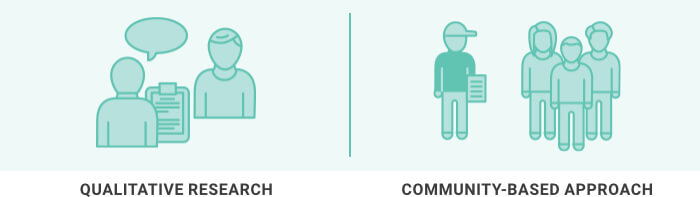
The benefits of using a community-based approach are:
- Building agency within local communities
- Ensuring tools are tailored to reflect their lived experiences and needs
- Having an effective and long-lasting impact on the community’s health
Iterative process to improve educational tools and materials:
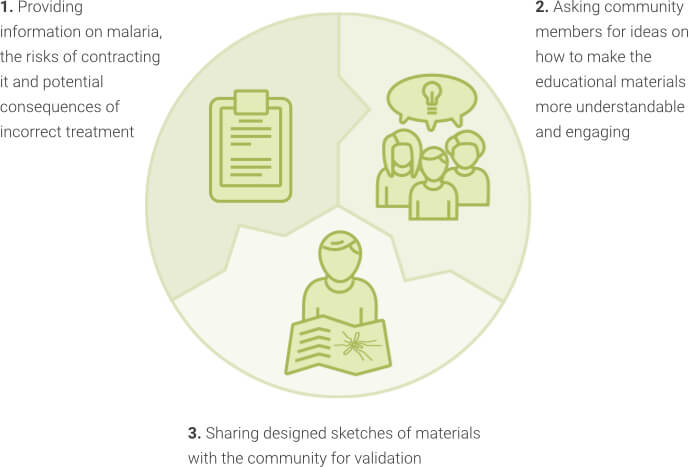
Epidemiological component
The goal of the epidemiological component is to introduce G6PD testing and evaluate the feasibility of combining it with the Malakit intervention.
A strong incentive for the development of the Malakit was concern about the development of a drug-resistant P. falciparum in the region. Besides, another malaria parasite species, the Plasmodium vivax (Pv), has since become the primary cause of malaria infection in the region, indicating a clear need to associate a Pv radical treatment to the Malakit intervention.
Another concern, however, is that this treatment can badly affect individuals with a G6PD deficiency – a genetic disorder that affects the body's ability to tolerate the Pv malarial treatment. To ensure safe deployment of this approach, a test for G6PD deficiency should be included in the kit services.
Objectives
- To build a foundation for improving Malakit's capacity to eliminate malaria in the region, including Plasmodium vivax transmission, among target populations
- To evaluate the capacity of facilitators to carry out and interpret G6PD tests
Methodology
- Facilitators are in charge of administering the G6PD tests. Before going to the field, they are trained to administer the tests under laboratory conditions.
- Facilitators are also observed on the field, so that they follow the protocols they have learned during the training. Their supervisors evaluate their performance by their capability to make the right decision after obtaining the G6PD test result.
Geo-regional component
Objectives
To foster sub-regional discussion on:
- The management of residual malaria in remote and hard-to-reach populations
- The objective of eliminating malaria in the region
Methodology
- A regional meeting on malaria in mobile populations was organised by the Ministry of Health’s Malaria Program in Suriname in 2019, and saw the participation of Guiana Shield countries, France, PAHO, and the Global Fund.
- Following this, a second meeting has been planned for 2022 to continue the discussion: this symposium will focus on Malakit and other innovative approaches to improve malaria control amongst mobile and hard-to-reach populations. An invitation will be extended to every country worldwide dealing with malaria in hard-to-reach populations.
Research uptake
Objectives
This research project aims to:
- Be informative: it provides a basis from which impactful strategies and additional materials to control malaria among mobile, migrant and hard-to-reach populations will be created.
- Build capacity: grounded in a community-based approach, its results will lead to more effective interventions to eliminate malaria in the region.
- Be sustainable: by sharing evidence and fostering regional and global discussions, the implementation of the interventions will become more sustainable.
Uptake activities
The results will be shared via scientific journals, a Public Relations report and via presentations and discussions during regional or global meetings.
Key audiences
- Mobile and migrant populations, particularly those working in artisanal and small-scale mining activities in illegal sites
- Community facilitators and health workers
- Global and regional organisations, governments and policymakers facing similar challenges with malaria in migrant and mobile populations
- Researchers and practitioners working in this field
International symposium on malaria prevention and control in mobile and hard-to-reach populations
Overview
Hosted by the Suriname Ministry of Health (MoH) and organized by the MoH Malaria program and collaborating partners, an international symposium on malaria prevention and control in mobile and hard-to-reach populations is scheduled for April 2022.
Leading technical agencies, international stakeholders, scientists and technical institutions will gather to share knowledge, innovations and tools for malaria prevention and control among mobile, migrant and hard-to-reach populations, who find themselves at-risk.
Save the date:
Symposium on Malaria Prevention and Control in Mobile and Hard-To-Reach Populations
April 6 – 8, 2022
Torarica Hotel, Paramaribo, Suriname
Background
Malaria is still highly prevalent in mobile, migrant and hard-to-reach populations, who struggle to access adequate diagnosis and treatment services. This not only hinders progress towards the Sustainable Development Goals, but also undermines global efforts towards malaria elimination.
The challenge
In order to leave no one behind, there is a need for targeted approaches and tools that focus on eliminating malaria among these key groups.
Innovative solutions to build these approaches and tools are being developed around the world, but their context and potential scale up is not visible enough to the global community. The purpose of this symposium is to give these innovative solutions more spotlight.
The aim
In order to make innovative interventions and solutions more visible and easy to implement, the symposium aims to:
- Share experiences and lessons learned from innovative approaches to malaria control and prevention in mobile and hard-to-reach populations
- Share preliminary results from ongoing operational research projects or pilot studies on this topic
- Discuss the applicability of innovative strategies in different contexts
Outcomes
The symposium will lead to:

Improved knowledge about innovative strategies implemented or piloted

More networking among key experts and implementers in the field, during and after the symposium

A summary report with an overview of the strategies developed or in progress and their impact will be made available and disseminated after the symposium
Scientific Committee
Dr. Florence Fouque
Focal Point for Vectors Research for Implementation Unit at WHO/TDR
Francois Nosten
Professor in Tropical Medicine at Oxford University, Nuffield Department of Medicine and Director of the Shoklo Malaria Research Unit in Thailand
Dr. Mathieu Nacher
Researcher, Interregional Director of the Centre d’Investigation Clinique Antilles-Guyane (Inserm CIC 1424), Cayenne, French Guiana
Dr. Stephen Vreden
Malaria Specialist / Infectiologist, Chair of the Foundation for Scientific Research in Suriname
Dr. Michael McDonald
International consultant / Malaria advisor (for WHO/GMP, IVVC and others)
Dr. Maylis Douine
Medical doctor/researcher at Centre Hospitalier Cayenne, French Guiana
Dr. Martha Suárez-Mutis
Researcher, Parasitology Laboratory, Instituto Oswaldo Cruz/FIOCRUZ, Brazil
Dr. Hélène Hiwat
Coordinator Malaria Program, Ministry of Health Suriname
Dr. Hedley Cairo
Coordinator Diagnosis and Treatment, Malaria Program, MoH Suriname
Collaborating partners and donors
Partners
- Ministry of Health/Ministry of Health Malaria Program Suriname
- Foundation for the Advancement of Scientific Research in Suriname (SWOS)
- Centre Hospitalier de Cayenne, French Guiana
Donors
- WHO/TDR grant to Ministry of Health in Suriname
- European Regional Development Fund (FEDER) via the Interregional Amazon Cooperation Program (IACP) as part of support to Centre Hospitalier de Cayenne, French Guiana
- Global Fund Malaria grant to the Ministry of Health of Suriname
Registration and contact details
Find the details on how to register to the event here.
- For any query, send an email to: info@sumalariaprogram.org
Collaborating partners
Partners
- Centre d’Investigation Clinique Antilles-Guyane - Inserm 1424
- Centre Hospitalier de Cayenne
- Foundation for the Advancement of Scientific Research in Suriname (SWOS)
- Ministry of Health Malaria Program Suriname
- Fundação Oswaldo Cruz
- Ministry of Health (Brazil)
- Elimination Unit, WHO Global Malaria Programme (GMP)
- Special Programme for Research and Training in Tropical Diseases (TDR)
Donors
- Le Fonds européen de développement régional (FEDER)
- The Global Fund
- Pan American Health Organization
- Ministry of Health (Brazil)
- Special Programme for Research and Training in Tropical Diseases (TDR)
Contact details
Suriname
Principal Investigator: Hélène Hiwat, Suriname Ministry of Health Malaria Program
Email: helenehiwat@gmail.com
Principal Investigator: Stephen Vreden, Foundation for Scientific Research in Suriname
Email: stephenvreden@yahoo.com
French Guiana
Malakit Project Leader: Maylis Douine, Centre d’ Investigation Clinique Antilles-Guyane, Centre Hospitalier de Cayenne
Email: maylis.douine@ch-cayenne.fr
Malakit Program Coordinator: Muriel Galindo
Email: muriel.galindo@ch-cayenne.fr
Brazil
Principal Investigator: Martha Suárez-Mutis, Institute Oswaldo Cruz, Fundação Oswaldo Cruz (Fiocruz)
Email: marthasuarezmutis@gmail.com