COVID-19 and TDR
COVID-19 and TDR
TDR is a global programme of scientific collaboration that helps facilitate, support and influence efforts to improve the health and well-being of people burdened by infectious diseases of poverty. As expected, much of our work has been affected by the COVID-19 pandemic. Given our broad network of partners and collaborators, we would like to provide the following update. This will evolve as the pandemic situation evolves.
TDR’s contribution to the COVID-19 response effort include the following:
- supporting infectious disease researchers with training relevant to the COVID-19 context
- working with partners to support research on infectious diseases in resource-limited settings affected by COVID-19.
Supporting infectious disease researchers with training relevant to the COVID-19 context
The COVID-19 pandemic is testing the health research capacity of every country in an unprecedented way. Strengthening capacity for research on infectious diseases of poverty has always been at the heart of TDR’s training programmes, and we are seeing how years of investment are now paying off.
TDR-trained researchers applying their skills to the COVID-19 response effort
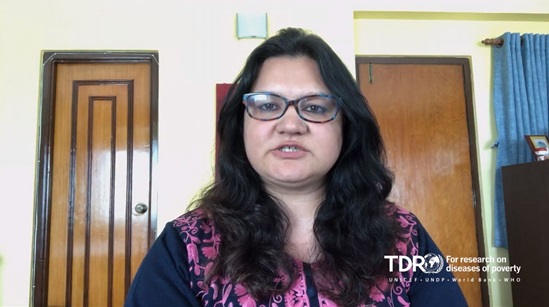
More than 400 TDR-trained researchers and programme officers are involved in COVID-19 response efforts around the world in a recent survey of TDR alumni. Research training provided by TDR through its various training schemes has had benefits beyond research, with skills gained now being applied by 60% of respondents to various aspects of the COVID-19 pandemic response. As well as research, these include: critical preparedness and response; situation analysis; surveillance; infection control; and clinical management. A recently published profile of a TDR fellowship recipient demonstrates the impact.
Many of our current training programmes, such as the Structured Operational Research and Training IniTiative (SORT IT), are now being conducted virtually. We have piloted 10 SORT IT studies involving 11 countries using the SORT IT virtual platform in Eastern Europe. The online version of our Implementation Research Toolkit is also being adapted for virtual learning.
In addition, TDR has developed a customized training course on Good Clinical Practice (GCP) for research teams in all hospitals participating in the WHO "Solidarity" clinical trial for COVID-19 treatments. This course is available on WHO Academy’s COVID-19 mobile learning app and has already been delivered to some country teams that are about to enrol patients in the Solidarity trial.
Working with partners to support research on infectious diseases in resource-limited settings affected by COVID-19
The adverse impact of COVID-19 on health and welfare has been considerable in resource-limited settings. We have been collaborating with partners to support research that aims to minimize the impact in low- and middle-income countries (LMICs).
Measuring the impact of COVID-19 on visceral leishmaniasis (VL) elimination efforts
We are supporting studies on the impact of COVID-19 on VL elimination efforts in Nepal and in Bangladesh (“Follow up Assessment of Visceral Leishmaniasis (VL) Treated Patients and Assessment of Impact of COVID-19 in VL Control Services in Nepal / Bangladesh”).
Ensuring continuity of tuberculosis care amid COVID-19
TDR
is supporting the 27 countries of the West African Regional Network for
Tuberculosis control (WARN-TB) and the Central African Regional Network for
Tuberculosis control (CARN-TB) to ensure
continuity of TB care amid COVID-19. Research on this topic in the WHO European
Region is also being supported through grants.
Mitigating risks to malaria control
In collaboration with the Seasonal Malaria Chemoprevention (SMC) working group and the WHO Global Malaria Programme, TDR is: helping countries in Africa navigate the potential impact of COVID-19 on SMC campaigns and implementation research on SMC.
Supporting research to tackle public health emergencies
TDR is partnering and collaborating with the Global Outbreak Alert and Response Network (GOARN) on a Structured Operational Research and Training Initiative (SORT IT) programme on tackling public health emergencies. This will help scientists develop the practical skills to conduct operational research on any aspect(s) of emergency preparedness and response (including outbreaks) and foster evidence-informed decision making. The focus of the program will be on GOARN partners in the WHO South-East Asia Region.
TDR is also supporting research in the WHO Eastern
Mediterranean Region on implementing International Health Regulations and on
building health security and health emergency preparedness.
Promoting
research data sharing
TDR
is contributing to the work of the COVID-19 Clinical Research
Coalition, announced in a comment in The Lancet. As a member of the coalition,
TDR is contributing to the Data Sharing Working Group with a focus on
supporting research in resource-limited settings.
TDR also chairs the Data Access Committee for a joint IDDO (Infectious Diseases Data Observatory) and ISARIC (International Severe Acute Respiratory and Emerging Infection Consortium) clinical data platform that curates data on COVID-19 from 55 countries including more than 489,000 patient records. This data platform hosts one of the largest international collections of clinical data related to COVID-19. The platform enables responsible use of data, allowing researchers to address clinically important questions and generate new evidence that reduces the impact of COVID-19.
Supporting ethics review committees
TDR has commissioned a survey of ethics review committees in Africa and Asia to identify challenges encountered because of the COVID-19 pandemic, common gaps that need to be addressed, and solutions that could eventually be replicated or scaled up for future pandemics.
Providing a forum for research funders to exchange information and good practices
As a
programme cosponsored by UNICEF, UNDP, the World Bank and WHO, TDR is uniquely
placed to facilitate exchange of information on COVID-19 activities currently
being carried out by each agency and to identify potential areas of joint work.
The ESSENCE on Health Research initiative, whose Secretariat is hosted at TDR,
also serves as a platform for funding agencies to exchange good practices for
managing research funding and research capacity strengthening in low- and
middle-income countries in a COVID-19 pandemic context.
Implications of COVID-19 on how TDR works
- TDR is based at the World Health Organization headquarters in Geneva. In March 2020, WHO headquarters switched to working virtually, except for staff working directly on COVID-19.
- The return to the office will be phased in accordance with the regulations set by the local and national authorities in Switzerland and in line with the epidemiological situation and vaccinations process in 2021.
- All existing contractual arrangements with collaborators and institutions will remain in place. Any individual(s) or organization(s) supported by TDR with further questions should contact the relevant TDR project manager.
- While there were some delays in the research and training activities in early 2020, currently, grantees are working virtually as much as possible. Our workplan for 2020–2021 remains unchanged for the most part, with some adjustments to timelines and planned costs.
TDR Governance meetings
- The Scientific and Technical Advisory Committee (STAC) meeting was held in March 2021 the Standing Committee meeting was held in November 2020, both virtually.
- The Joint Coordinating Board (JCB) meeting was held virtually 17–18 June 2020, allowing for governance continuity of TDR’s performance. The JCB meeting in 2021 will also take place in June virtually. The meetings allow JCB members to review the Programme's results and achievements, review financial reporting and guide plans for 2021 and beyond. JCB Webinars are being organized to provide technical update on TDR activities, especially in the context of COVID-19.
- Other than the governance meetings, all in-person meetings scheduled to take place at WHO headquarters are cancelled until further notice, although the possibility of holding these meetings virtually will be explored.
For any inquiries, please contact Dr Garry Aslanyan, Partnerships and Governance Manager.
We thank you for your continued collaboration during these extraordinary times.
John Reeder
Director, TDR

Global Health Matters
A new podcast that explores how innovative and inspiring research contributes to achieving health for all.
Learn more