

TDR’s Joint Coordinating Board (JCB) approved a new six-year Strategy document for the 2024-2029 period during a meeting on 14-15 June 2023.
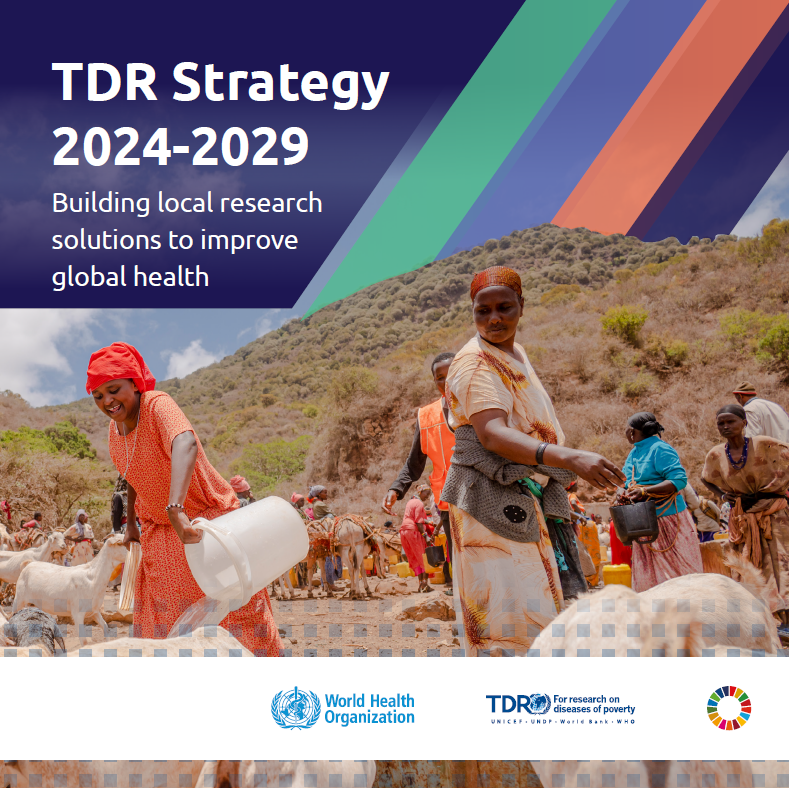 TDR Director John Reeder presented the new Strategy, a product of wide consultation that builds upon TDR’s experience supporting country-led implementation research that improves access to and scaling up of health interventions, strategies and
policies and strengthens health systems. TDR also identifies opportunities where it can contribute to building country resilience to four major global health challenges: epidemics and outbreaks; climate change’s impact on health; control
and elimination of diseases of poverty; and resistance to treatment and control agents.
TDR Director John Reeder presented the new Strategy, a product of wide consultation that builds upon TDR’s experience supporting country-led implementation research that improves access to and scaling up of health interventions, strategies and
policies and strengthens health systems. TDR also identifies opportunities where it can contribute to building country resilience to four major global health challenges: epidemics and outbreaks; climate change’s impact on health; control
and elimination of diseases of poverty; and resistance to treatment and control agents.
Across the Programme, multisectoral and One Health approaches to tackling infectious diseases will underscore research and capacity building activities. One Health in particular was recognized by several JCB members as an increasingly important way of working.
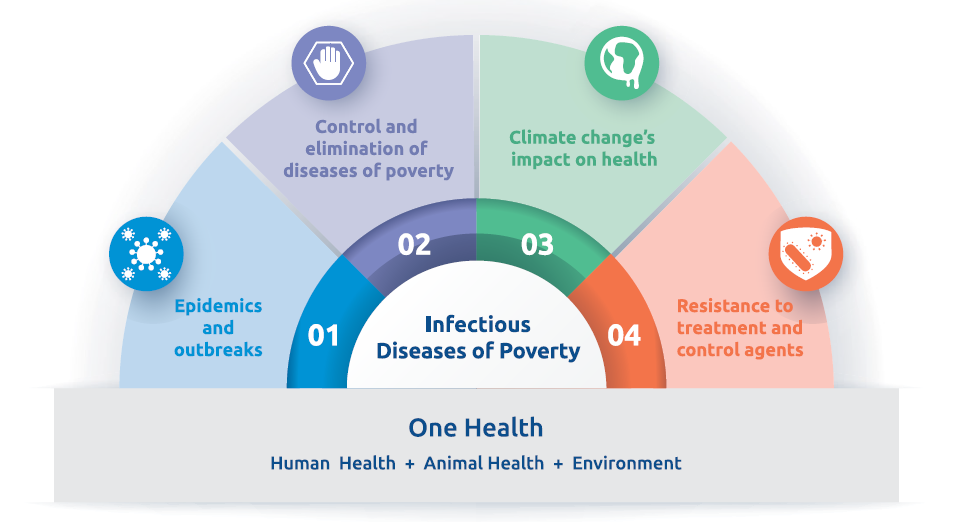
As outlined in the TDR Strategy 2024-2029, TDR will focus on four major global health challenges affecting infectious diseases of poverty using a One Health approach.
“I want to congratulate TDR on adapting to the new realities and needs of public health systems and making a difference in countries, because the research is based on the needs of countries and not dictated from outside,” said Dr Vic Arendt, Chair of JCB.

46th Joint Coordinating Board meeting participants
The two-day meeting also featured two technical presentations that demonstrated the impact of TDR. Dr Amara Leno from Sierra Leone’s Ministry of Agriculture and Food Security presented findings from TDR-supported operational research that convinced policy-makers in Sierra Leone to contribute more resources for improving monitoring of antimicrobial use in the agricultural sector. Dr Magaly Blas from Universidad Peruana Cayetano Heredia in Peru spoke about how support from TDR, PAHO and the Social Innovation in Health Initiative contributed to the success of the “Mamás del Río” programme that aims to reduce maternal and child mortality in Peru.
Dr Jeremy Farrar, who recently joined WHO as Chief Scientist, attended the meeting as TDR’s Special Programme Coordinator. TDR has made “incredible contributions in science but also in supporting people and institutions and the next generation of leadership,” he said.
For more information, please contact Dr Garry Aslanyan.