

Strengthening ethics review systems is essential to ensure that research involving human subjects is conducted responsibly. Over the past 25 years, TDR has advanced this mission through the Strategic Initiative for Developing Capacity in Ethical Review (SIDCER) and its regional arm, the Forum for Ethical Review Committees in Asia and the Pacific (FERCAP). This initiative is now responding to emerging ethical challenges such as the impact of artificial intelligence on research activities.
SIDCER was launched to address persistent variations in ethics oversight across countries and institutions. FERCAP subsequently emerged as the regional mechanism driving SIDCER’s implementation in Asia, promoting harmonized standards and shared commitment to responsible research conduct. Over 25 years, the network has demonstrated how regional collaboration can reinforce ethical governance in environments with differing regulatory frameworks, capacities and resources.
SIDCER/FERCAP has played a central role in introducing and operationalizing quality standards for ethics review, aligned with global frameworks while sensitive to regional realities. Key contributions include:
-development and uptake of structured Standard Operating Procedures;
-strengthening of Quality Management Systems within ethics committees (ECs);
-establishment of continuous education platforms; and
-implementation of the SIDCER Recognition Program as a measurable quality assurance mechanism.
Responding to AI and emerging ethical challenges
It is essential to ensure that ethics oversight evolves alongside scientific and technological advancements. SIDCER/FERCAP has expanded its focus to address new and emerging areas. For example, given the rapid expansion of artificial intelligence tools, data-driven methodologies and digital surveillance, the network has begun to explore structured approaches for reviewing:
-data governance and privacy protections;
-bias and fairness in algorithms;
-transparency and accountability in AI systems; and
-ethical implications of digital consent models.
This forward-looking approach positions SIDCER/FERCAP as a key resource for institutions preparing for next-generation research ethics challenges.
“As it moves into its next phase, SIDCER/FERCAP remains a vital platform for anticipating emerging ethical issues, reinforcing protections for research participants and supporting the responsible conduct of research,” said Juntra Laothavorn, Professor Emeritus at Mahidol University in Thailand and President of the SIDCER-FERCAP Foundation for Promoting the Development of Human Research Ethics.
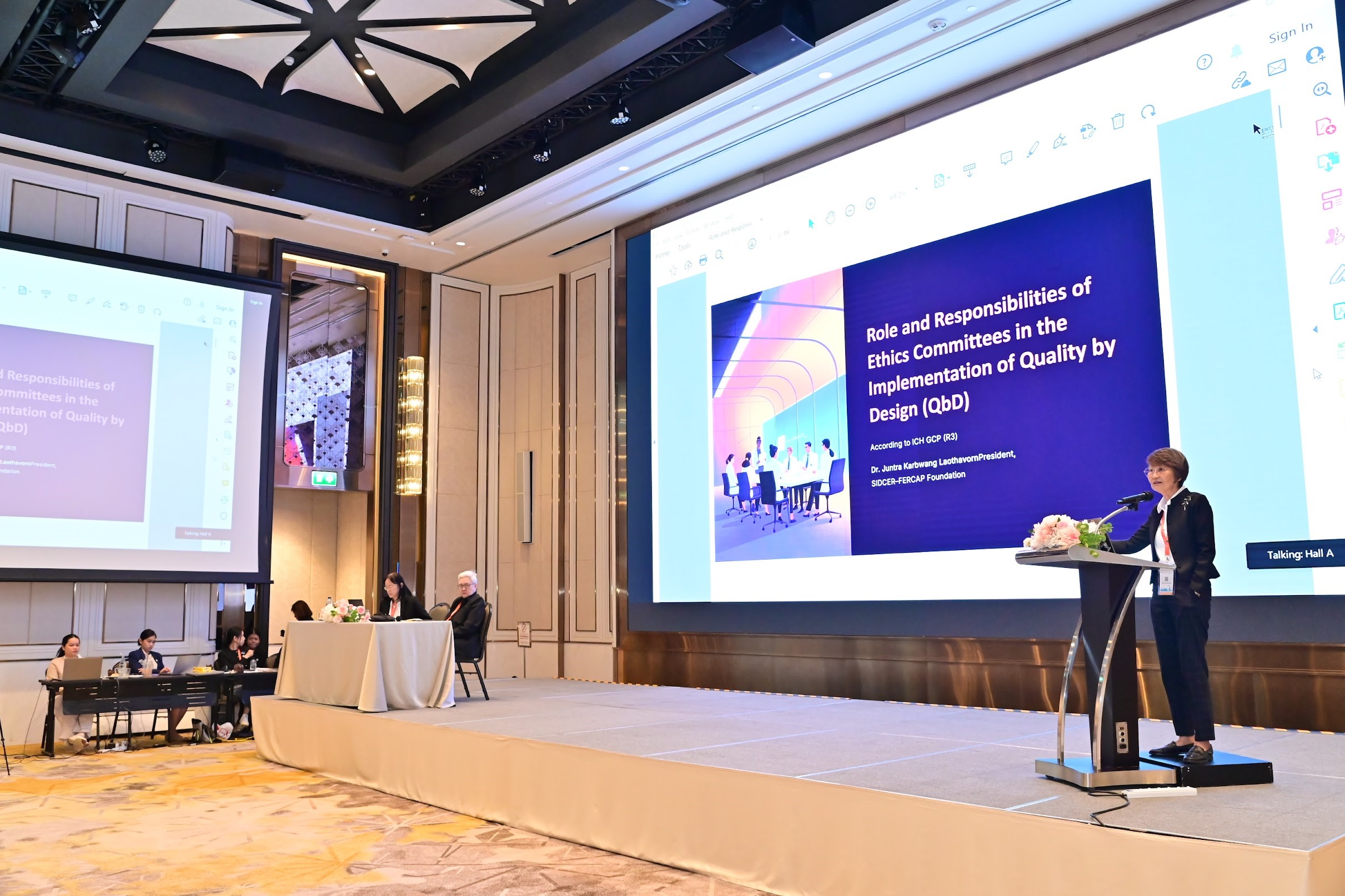
Professor Juntra Laothavorn speaking at the 25th FERCAP International Conference in November 2025 in Bangkok, Thailand. Credit: SIDCER-FERCAP Conference
For more information, please contact Dr Mihai Mihut.