

The COVID-19 pandemic has highlighted how global health security is reliant on all countries around the world, including low- and middle-income countries (LMICs), having strong health systems and health research capacities. However, despite the efforts of TDR and other research funders, imbalances in health research capacity still remain. It is imperative that this imbalance is addressed, especially in the LMIC settings where epidemic disease outbreaks often strike.
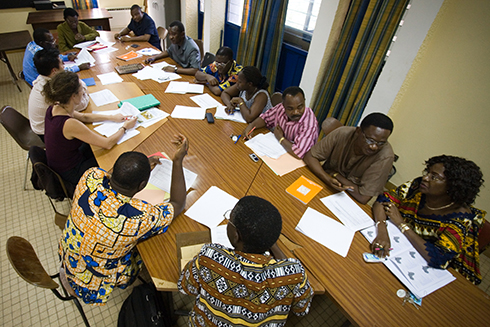
In 2018, the “Money and Microbes” report from the International Vaccines Task Force (supported by the World Bank Group and the Coalition for Epidemic Preparedness Innovations) recommended that research capacity building should be considered an element of pandemic preparedness and a component of the global health security agenda, and that the ESSENCE on Health initiative (ESSENCE) should articulate a mechanism for review of investment in capacity building in LMICs. As the sole initiative that brings together a wide range of funding agencies to coordinate funding efforts, it was not surprising that this TDR-based initiative was asked to tackle this problem.
At present, countries with low research capacity tend to focus research attention on their most pressing health issues, but this will not help them prepare for epidemics or pandemics. While COVID-19 and the threat of epidemics and pandemics emphasizes the urgency of strengthening health research capacity, actually doing so will also serve to improve healthcare in general. It will also reduce mortality and morbidity due to disease and help in the drive towards universal health care and achievement of the UN sustainable development goals.
The new ESSENCE Mechanism, proposed by ESSENCE in 2019 and recently outlined in an Annals of Global Health article, will give funders of research for health the information to identify the gaps in capacity that exist in LMICs and the opportunity to work together to address those disparities. It centres on three distinct but complementary “workstreams” to inform the funders: Data and Analysis, Investment Mapping, and Coordination and Collaboration.
This Mechanism was devised by ESSENCE, with input from the Global Coordination Mechanism for R&D Preparedness and LMIC representatives and follows a consultation with 40 diverse stakeholders involved in health research capacity strengthening in LMICs (including representatives from international scientific academies, research and development organizations, and other funding organizations from Africa, Asia, and Latin America). The paper in Annals of Global Health describes the methods, main findings, and recommendations for the development and initial implementation of the ESSENCE Mechanism.
The goal of the ESSENCE Mechanism is to improve efficiency, equity and overall research capacity while decreasing duplication and decreasing the number of countries with low research capacity. Its impact should be increased research on national health priorities and an improvement in pandemic preparedness.
While this three-pronged approach seems simple, there are many complexities – a few of which follow. Firstly, indicators and targets for health research capacity strengthening efforts need to be identified and agreed by all stakeholders. Doing so will help to establish road maps for future investments and mobilize resources within a framework for partner coordination and collaboration – in the same way that they have done for many global health and development programmes.
Secondly, funding for health research capacity strengthening is not currently differentiated by World RePORT from funding for health research (as health research capacity strengthening often takes place as an integral element of health research). Future versions of World RePORT will need to identify activities that specifically strengthen health research capacity.
Thirdly, funders have very different, well established approaches to funding. For example, at present many funders focus on research capacity strengthening in specific institutions, while others focus on consortia. While the latter has created some highly competitive centres of excellence, it has meant that some institutions and countries with weaker health research capacity have been left behind. For example, in 2017, 90% of research grants (from the funders in World RePORT) went to just 16 African countries; 11 countries received no grants. The ESSENCE Mechanism could address this by enabling the targeting of a subset of resources to sites/countries with low research capacity so that a minimum capacity to conduct research will exist in all countries.
The inaugural “virtual” meeting of the ESSENCE Mechanism took place on 4–5 June 2020. It gathered speakers and about 73 diverse stakeholders from Africa, Asia and Latin America dealing with the theme of capacity building for research for health. The detailed report of the consultant and the minutes from the meeting will be available in September 2020.
For more information, please contact:
Dr Garry Aslanyan
Manager, Partnerships and Governance
ESSENCE on Health Research Secretariat