

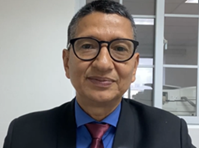
Dr Gustavo Ávila Montes is a Honduran physician and researcher whose career of more than 30 years personifies the impact of science on public health. Gustavo has dedicated his career to the study and control of vector-borne diseases, particularly dengue and Chagas disease, translating field research findings into public policies that have helped improve the quality of life of thousands of people in Honduras and other countries in Central America and the Caribbean.
Transforming research into national policies
Gustavo’s career is characterized by a tangible impact on the Honduran health system. The results of his research on Chagas disease laid the foundations for the creation of the National Chagas Disease Programme in Honduras. As its first Director, Gustavo led the implementation of large-scale interventions in the southern part of the country, a region with a historical burden of endemicity.
Significant progress in the prevention and control of Chagas disease was achieved through coordinated work between the National Chagas Disease Programme in Honduras and the Pan American Health Organization’s sub-regional Initiatives. In 2010, the country eliminated the “kissing bug” Rhodnius prolixus, the insect responsible for transmitting the disease in much of Central America. This reduced the risk for thousands of people in the most affected areas.
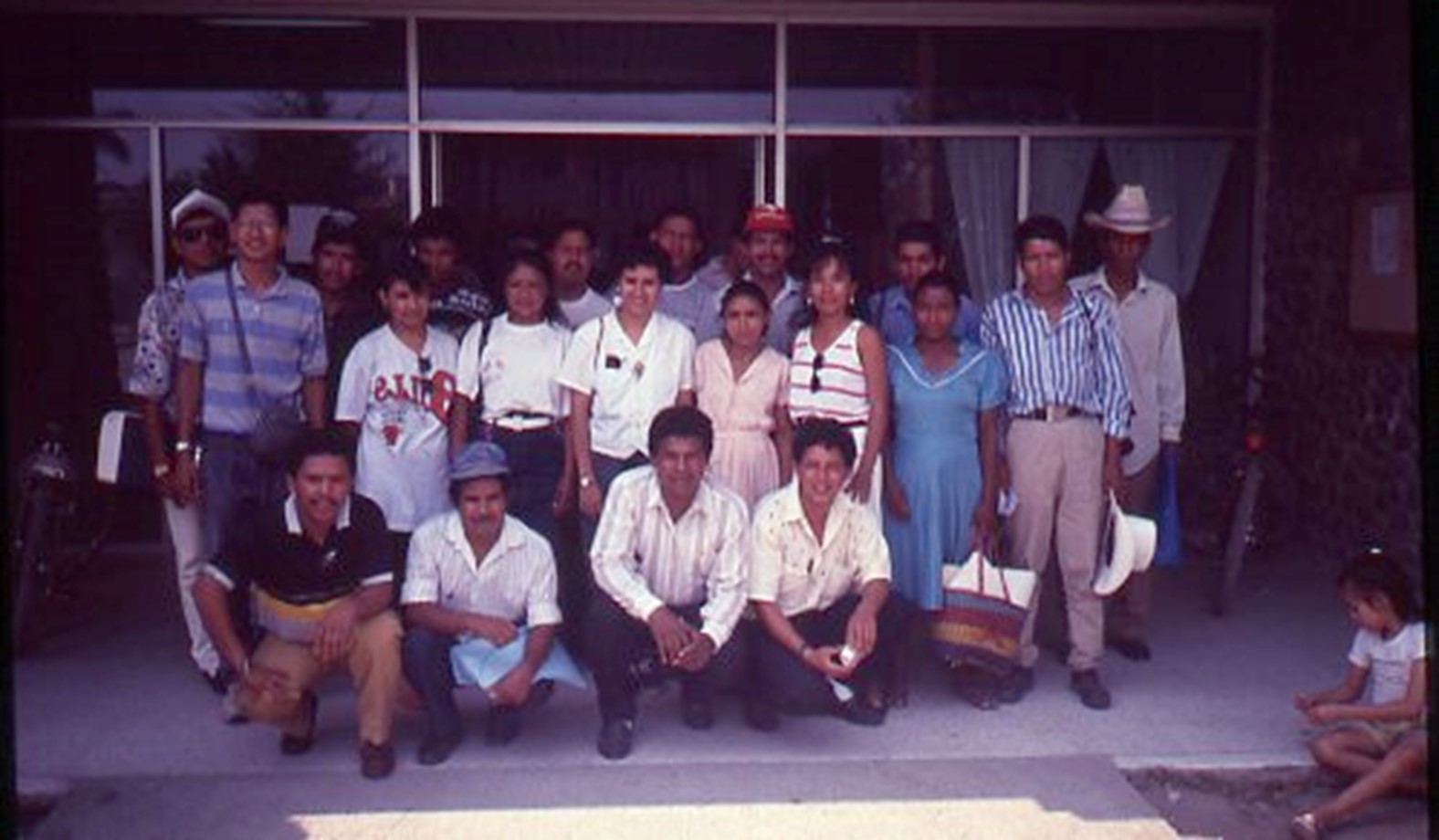
Training rural health promoters from the La Sampedrana Community on Chagas disease prevention in Comayagua, Honduras. Photo courtesy of Dr Gustavo Ávila Montes
Similarly, Gustavo’s studies on the effectiveness of school programmes for the elimination of mosquito breeding sites were so convincing that the Ministry of Health incorporated them into the National Dengue Programme, extending these actions to the main cities of the country. He has also offered his public health expertise to efforts responding to natural disasters such as the passage of Hurricane Mitch in 1998. At that time, he led the first research project on communicable disease outbreaks in Honduras and trained research teams throughout the national territory.

Gustavo identifying Aedes aegypti larvae with teachers from Pena Blanca, Cortes, participating in the School Environmental Programme against dengue. Photo courtesy of Dr Gustavo Ávila Montes
His leadership has also extended to international cooperation, working closely with the Pan American Health Organization (PAHO) and USAID during health crises such as the Zika epidemic.
Early career support from TDR
Gustavo’s link with the Special Programme for Research and Training in Tropical Diseases (TDR) was the spark that ignited his research engine. In 1990, upon his return to Honduras after completing his master's studies in the United States, he received an invitation from researcher Dr Carlos Ponce Garay to participate in an initiative funded by TDR that sought to evaluate new tools against Chagas disease: insecticidal paint and fumigant canisters. With his first TDR research grant, Gustavo studied the acceptability of these tools in communities.
Soon after, a second TDR grant allowed him to evaluate a school-based dengue control programme, based on his previous experience with the United States’ Centers for Disease Control and Prevention (CDC) in Puerto Rico. "We were able to demonstrate the effectiveness of the school programme as a complementary tool for dengue control and to promote community participation. This boosted my career and led me to venture into other fields of public health," recalls the doctor.
Science with a human face and community empowerment
For Gustavo, community participation is the central axis of any successful intervention. His work in this area has ranged from child survival in western Honduras—where he coordinated radio education programmes to improve nutrition in hard-to-reach rural areas—to reproductive health.
One of his most satisfactory experiences has been the study of risk factors in adolescent pregnancy. Under his direction, a programme was implemented that reached more than 20 000 young people in marginal urban sectors. "It was very uplifting to observe the level of empowerment of these young people for decision-making and to see them persevere in their life projects," he says proudly.
Leadership and vision for the future
In addition to his direct impact on communities, Gustavo has stood out for his commitment to strengthening human talent in health. As former regional director of the Central American HIV Project, he promoted the democratization of knowledge for health personnel through digital platforms and online courses.
Most recently, in 2024, he led the risk communication component under the One Health framework for the global project Meeting Targets and Maintaining Epidemic Control (EpiC), funded by the U.S. Department of State and PEPFAR, training nine intersectoral working groups in Honduras in risk communication and community engagement and providing technical advice to the "Risk Communication and Community Participation Committee" of the Ministry of Health of Honduras.
Additionally, Gustavo continues his work as a mentor to young scientists, promoting implementation research as the most effective way to solve local health problems. When reflecting on the future of health research in Latin America, Gustavo is clear: local research is the compass that should guide the scientific and academic system. "The future of research will need to focus on technological innovation to overcome historical inequalities and improve the quality of and access to health care. We need useful, relevant and sustainable research that responds to the real public health challenges of our countries, with a shared governance commitment between governments, academia, the private sector and health organizations."