

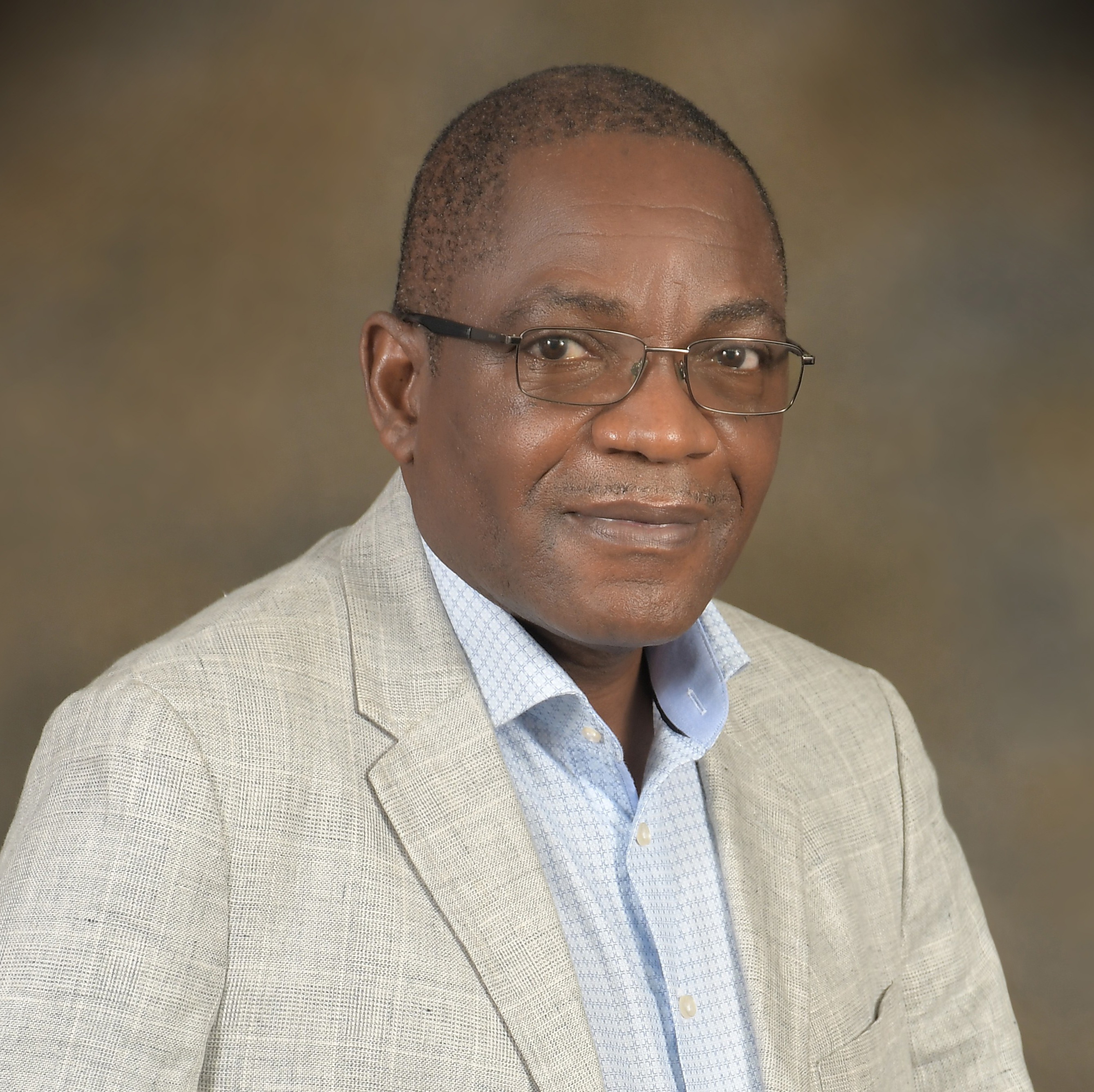
During his time as Kenya’s National Tuberculosis Programme Manager, Dr Jeremiah Chakaya Muhwa identified disabilities resulting from TB as a major issue not being addressed in standard care for TB patients. Yet he struggled to drum up support from health policy-makers. That is until he connected with TDR’s Structured Operational Research and Training Initiative (SORT IT). Now, care for disabilities resulting from TB is integrated into national TB guidance.
Dr Jeremiah Chakaya Muhwa is a world-renowned expert in TB control from Kenya and has held numerous global leadership positions, including Vice Chair of the Stop TB Partnership Coordinating Board and President of the International Union Against Tuberculosis and Lung Disease.
Earlier in his career, he led the National TB Programme in Kenya, where TB is one of the leading causes of death.
Recognizing TB-associated disability as an unmet need
Jeremiah realized early on that TB programmes around the world were not looking at patients holistically. In fact, a growing body of evidence showed that many patients who successfully completed TB treatment continued to suffer co-morbidities (such as HIV or diabetes) as well as physical disabilities. Not only could these impact negatively on people’s quality of life, including their ability to work, but it could lead to higher mortality rates amongst TB survivors compared with the general population.
“One of the biggest problems I encountered was that even if patients were said to be successfully treated and clear of TB, they would continue to have symptoms,” he said. “And there were no care programmes for them at all. People were suffering from TB-associated disability and co-morbidities. We needed to find a better way to address their care needs.”
However, it proved difficult to convince health policy-makers to investigate the impact disabilities were having on TB patients and why addressing any disability should be part of standard care for TB patients. He therefore needed further evidence to make his case. As in many low- and middle-income countries, Jeremiah knew that Kenya was “data rich but information poor” - i.e. data might exist at the national level but they weren’t being used to inform improvements in public health.
Implementation research as an effective means to change TB health policy
It was a chance encounter that eventually allowed Jeremiah to change TB health policy in Kenya.
“While I was managing the national TB programme, I had the privilege of attending an implementation research workshop where researchers including Tony Harries from the International Union Against Tuberculosis and Lung Disease and Rony Zachariah from TDR were discussing implementation research (IR). I immediately saw the need and understood clearly the role of IR in advancing TB care and prevention in countries.”
Jeremiah then participated in TDR’s Structured Operational Research and Training Initiative (SORT IT) with the goal of influencing public policy with data. SORT IT is a global partnership coordinated by TDR which supports countries and institutions to conduct research around their own priorities, build sustainable research capacity and make evidence-informed decisions for improving programme performance.
The impact on TB policy and programming
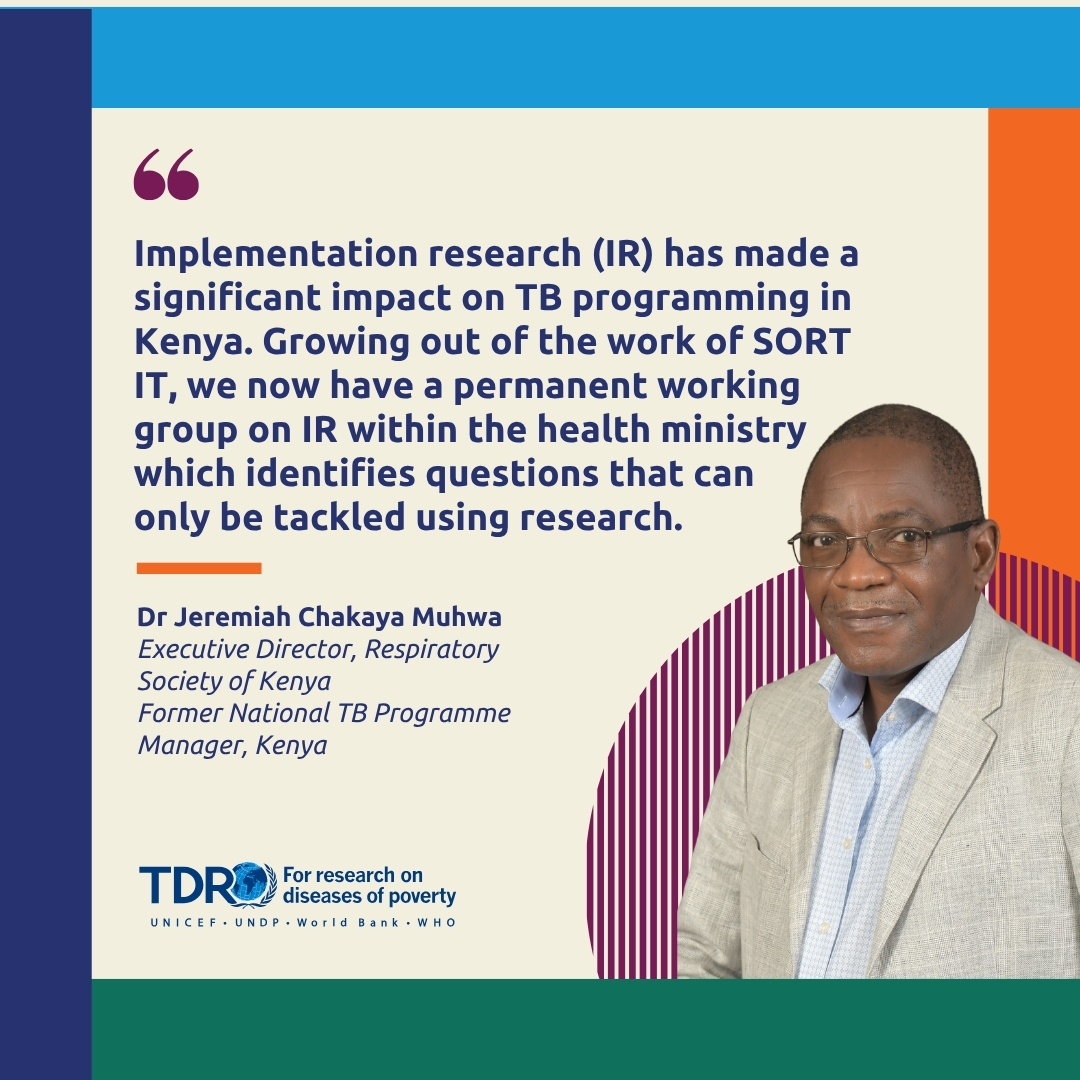
“Implementation research has made a significant impact on TB programming in Kenya,” reflects Jeremiah. “Now, post-TB lung disease or post-TB disability is an integral component of national TB guidance. People are told what to look for, how to look for it and how to interpret the data. And growing out of the work of SORT IT, we now have a permanent working group on IR within the health ministry which identifies questions that can only be tackled using research. For me this is very exciting.”
Recently, Jeremiah participated in a multi-country SORT IT project conducted in Kenya, Uganda, Zambia and Zimbabwe which helped translate WHO guidance on TB-associated disability into health care practice. It proved that early interventions for multimorbidity can lead to major reductions in symptoms, risk factors and disability. This study provided a promising roadmap for progress towards achieving this goal.
To mark World TB Day, the message Jeremiah would like to share with policy-makers and global partners is to remember that care and treatment for TB should go beyond just merely diagnosing and treating TB. “We need to provide patient-centred care both during and after TB treatment. We need to look at these individuals in a comprehensive way and, when we do not have enough information, there’s a critical role for implementation research.”
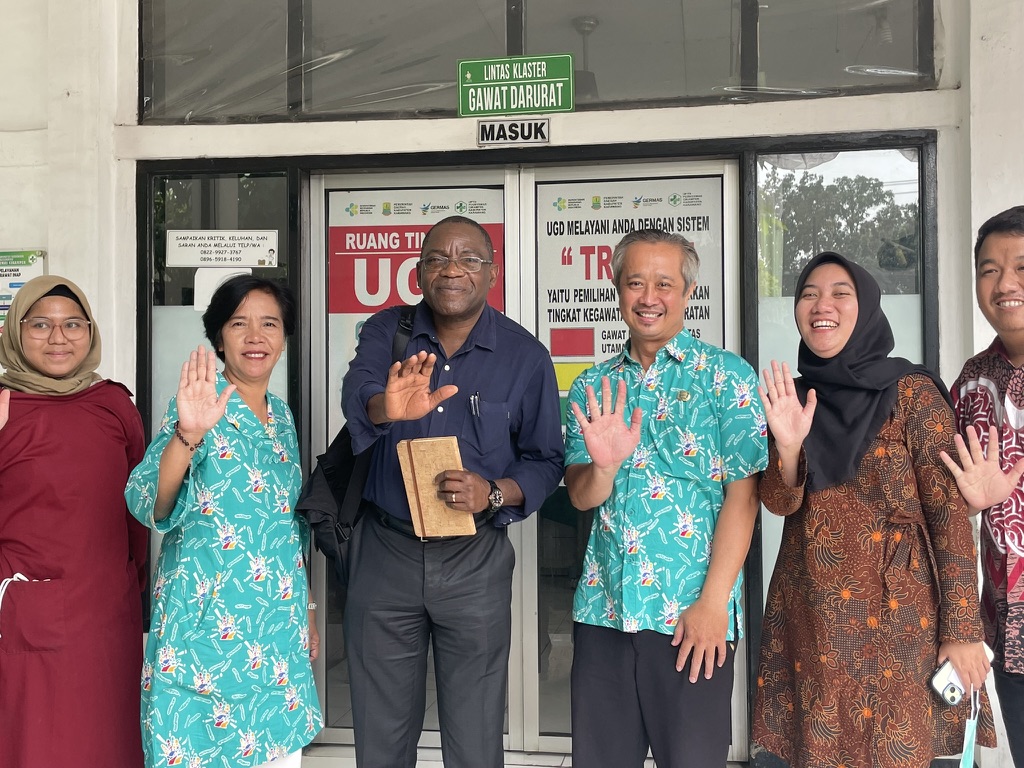
Dr Chakaya with community health care workers in Indonesia when he led the country’s TB programme review last year. Photo courtesy of Dr Chakaya.
For more information, please contact Dr Rony Zachariah.