

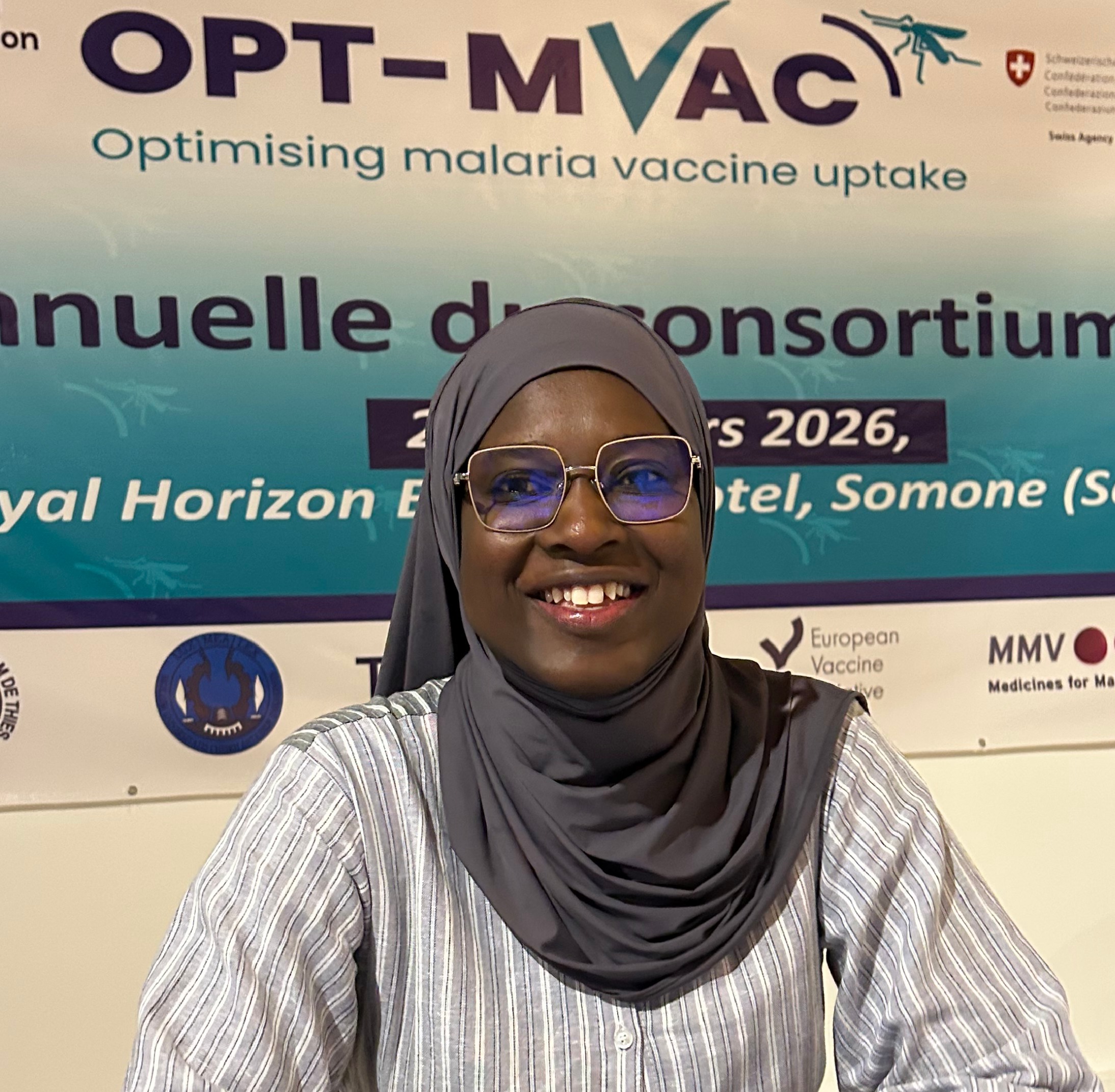
Senegalese physician and researcher Dr Fatimata Bintou Sall plays a central role in the Optimising Malaria Vaccine Uptake (OPT-MVAC) project in West and Central Africa. She credits a TDR fellowship for strengthening her skills in epidemiology and broadening her perspective beyond her original career path towards a focus on malaria.
After finishing her medical training, Dr Fatimata Bintou Sall thought she would pursue a career in childhood haematological cancers with a particular focus on infectious diseases. She was interested in the association between malaria and lymphoma. However, it was thanks to a TDR scholarship for her Master’s in Public Health that she decided to focus on malaria, at the intersection of clinical and implementation research.
In addition to a PhD in molecular biology (focusing on epidemiology and implementation research), Fatimata has also recently completed TDR’s Clinical Research Leadership fellowship based at the Luxembourg Institute of Health where she fine-tuned her statistical and methodological skills.
“My relationship with TDR has been truly transformative for my career,” she said. “It has helped me strengthen my foundation in epidemiology, in implementation research, clinical research and public health and it provided me with the tools to critically analyze health systems challenges and design context-appropriate interventions. But it was so much more than gaining technical skills – it also strengthened my leadership skills and my ability to coordinate multi-country research projects while allowing me to develop a wide network of researchers and collaborators who are working on global health.”
Playing a leadership role in the OPT-MVAC consortium
In addition to mentoring and supervising students at the Université Iba Der Thiam de Thiès (UIDT), Fatimata is the Scientific Coordinator of the Optimising Malaria Vaccine Uptake (OPT-MVAC) consortium, which supports malaria implementation research led by national immunization, malaria and pharmacovigilance programmes in 14 Central and West African countries. Through this work, it indirectly contributes to malaria vaccine rollout and implementation. Eight international institutions have partnered with these countries to conduct vaccine implementation research to help optimize delivery strategies to fit local contexts and share best practices across the network.
“While we want to help countries improve the quality of their quantitative data to enable them to make decisions on expanding vaccine coverage, we also encourage them to conduct qualitative studies,” she said. “What barriers, perceptions and expectations do communities have which will help us co-design context-specific strategies to help improve delivery and uptake of the vaccine?”
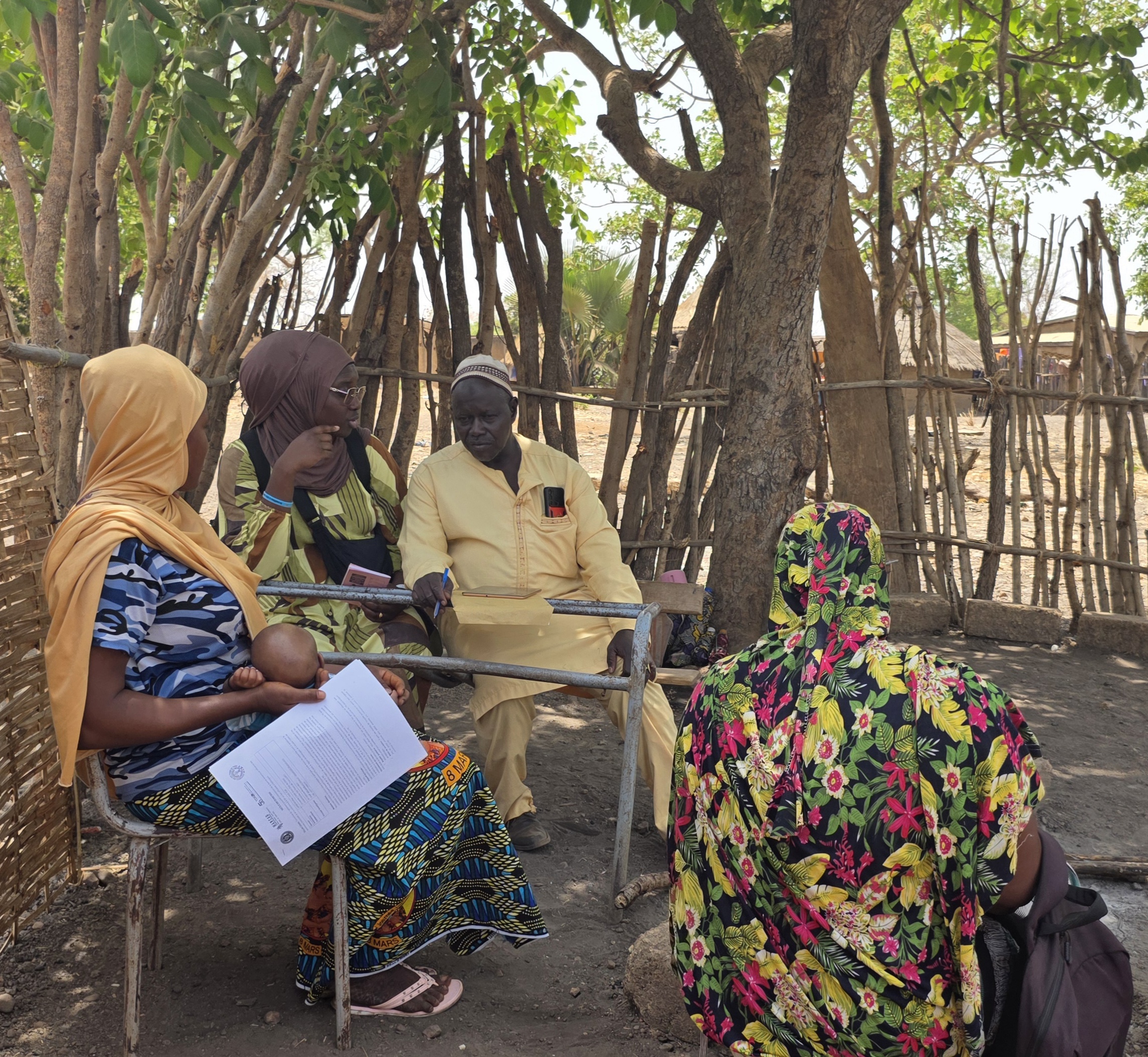
Dr Fatimata Bintou Sall discussing malaria prevention with community members during a field visit in Kedougou, Senegal, as part of research activities supported by TDR and Malaria Research Capacity Development (MARCAD) Plus. Photo credit: Dr Safiétou Kandé
Such barriers to improving service delivery could be anything from what leads to missed follow-up vaccine appointments, to what makes parents hesitate in vaccinating their children in the first place, to what security issues stop a child from being vaccinated (such as war). OPT-MVAC is also interested in learning how best to integrate malaria vaccines into a country’s existing health interventions, such as routine immunization and seasonal malaria chemoprevention.
Addressing malaria vaccine rumours
Another important issue for OPT-MVAC is how to address rumours and misinformation about the malaria vaccine. The consortium members are studying community perceptions with the aim to improve communications to counter misinformation.
Fatimata gives the example of an infodemic in Togo sparked by a social media influencer spreading rumours about the malaria vaccine. “We quickly conducted a special webinar with regional key stakeholders, such as public health workers, to share their experiences and discuss how to respond. Timely responses and efforts like this can help us build strategies together to be better prepared to counter rumours and misinformation.”
Despite such challenges, the OPT-MVAC project keeps her motivated. “What keeps me focussed on malaria is the feeling that every piece of evidence, every operational improvement can contribute to saving lives. You can see the impact of your research almost immediately.”
For more information, please contact Dr Corinne Merle.