

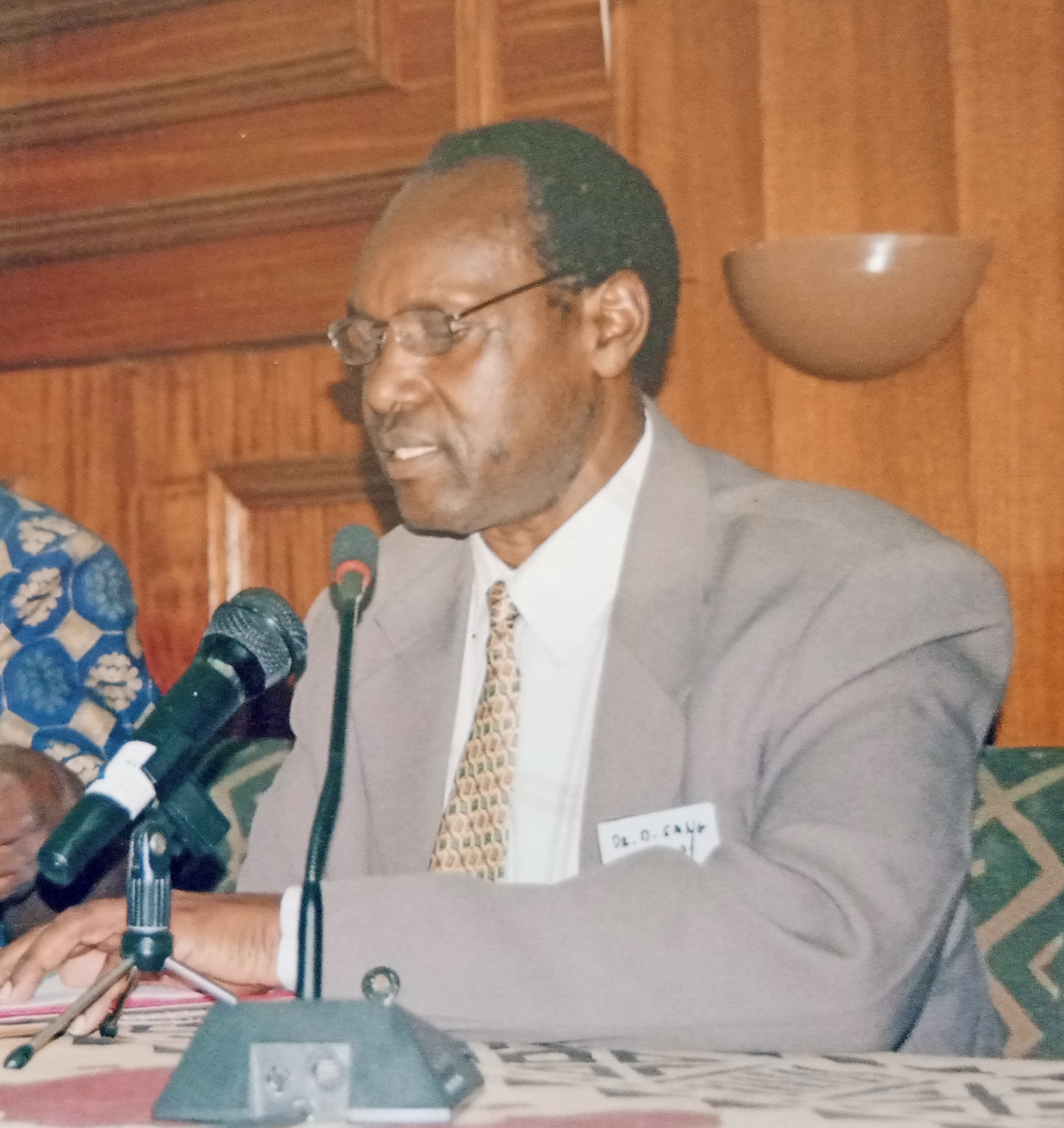
Guinea-worm disease is on the verge of global eradication with only 13 human cases reported in 2024. Professor David Kiprop Sang is part of this success story, as he served as National Programme Coordinator for Kenya’s Guinea-Worm Elimination Programme. Support from TDR spanned his career from his PhD to research grants allowing him to study how to control and eliminate Guinea-worm and other neglected tropical diseases.
For David, it all started with a visit to a research station affiliated with the Kenyan Ministry of Health during his undergraduate years at the University of Nairobi. This event contributed to his choice of entomology as one of his biology majors. Following his MSc studies in applied parasitology and medical entomology at the Liverpool School of Tropical Medicine, David returned to Kenya to continue his studies, thanks to a TDR grant.
After several years of post-doctoral experience in research and control of cutaneous and visceral leishmaniasis in Kenya, David went on to manage other programmes on parasitic diseases control for the Ministry of Health, including onchocerciasis. But it would be his work on eliminating Guinea-worm disease that would earn him a page in the history books.
Guinea-worm is a parasitic disease transmitted through contaminated drinking water, causing a painful blister from which a worm slowly emerges. Infected individuals are often incapacitated for weeks or months. This disease mostly affects rural, underserved and remote populations that rely on open, stagnant water sources for drinking-water.
“When the time came and there was a global push to eradicate the disease, there were very few people who had experience working on parasitic diseases in North Western Kenya, where Guinea-worm still existed,” David said. “So that is why I was chosen by the Ministry of Health to lead the team.”
Leading Kenya’s Guinea-Worm Elimination Programme
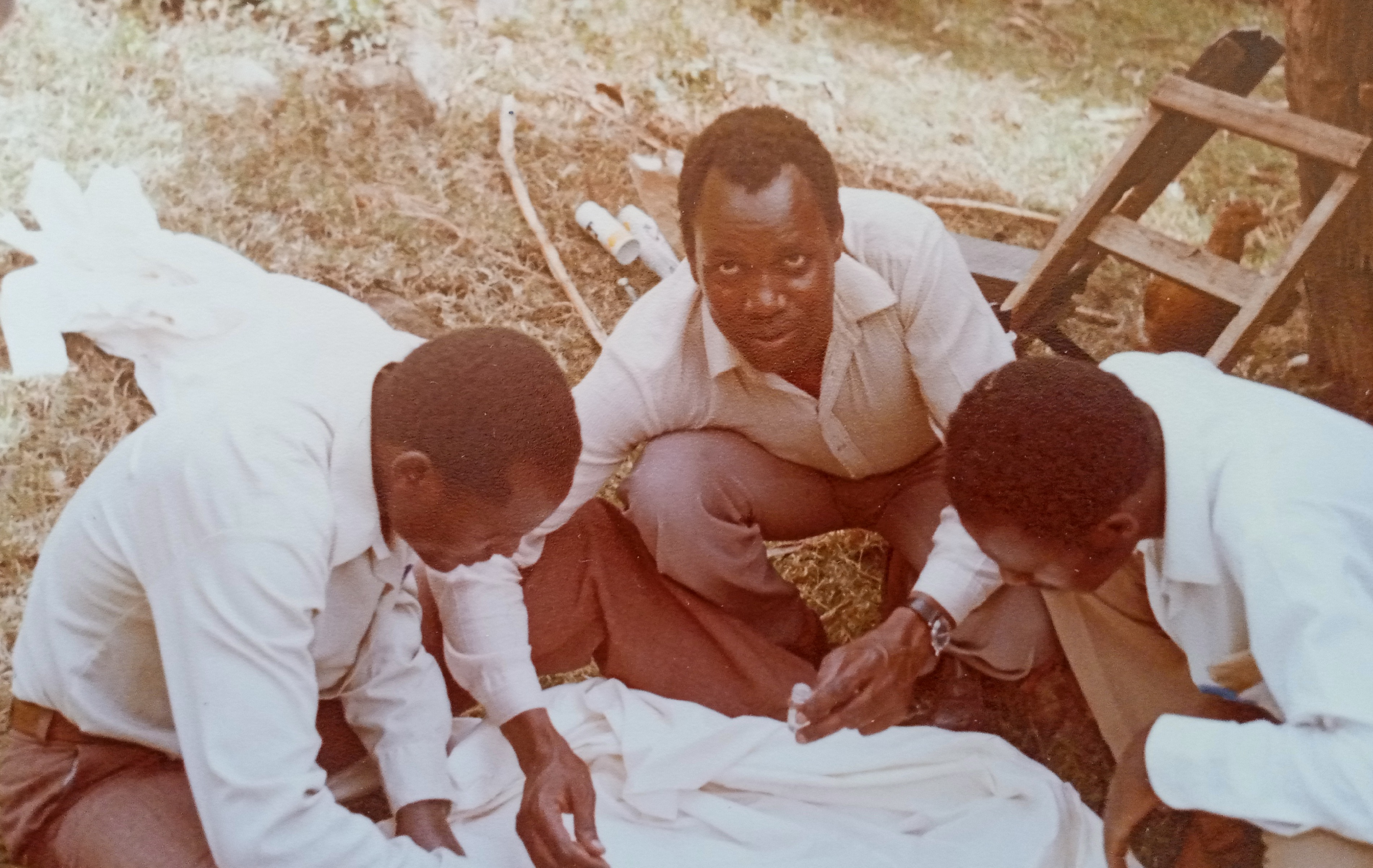
David collecting endophilic phlebotomine sand flies using the space spraying method in the Lake Victoria basin, Western Kenya. Photo courtesy of David Kiprop Sang.
As National Programme Coordinator for Kenya’s Guinea-Worm Elimination Programme, David pursued a multi-faceted approach, which included surveillance and mapping, safe water access, vector control and community education.
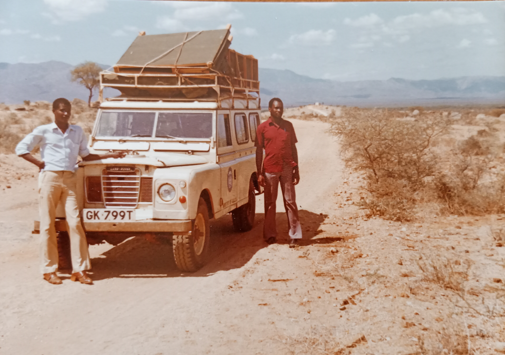
Field work in the arid lowlands of North Western Kenya endemic for Guinea worm and visceral leishmaniasis. Photo courtesy of David Kiprop Sang
While Kenya had interrupted transmission of Guinea-worm by 1995, it could not yet be granted an elimination certificate by WHO (i.e. zero reported human cases and zero animal infections over a period of at least three consecutive years) because the surrounding countries were highly endemic, and there was a lot of cross-border travel. However, by 2014, most of its regional neighbours had drastically reduced the disease, so finally Kenya could work with WHO on its certification. David was the lead writer of the report, having spent many years tracking this disease. WHO finally declared Kenya free of Guinea-worm disease in 2018.
For his work on Guinea-worm, he has received two prestigious awards: in 2002 from the Carter Centre for being the first African country to interrupt transmission of Guinea-worm and in 2022 from the President of Kenya who awarded him the Moran of the Order of the Burning Spear (MBS) for his contributions to public health.
But it is his work with local communities that he will remember the best. “When you work in these endemic communities, you need to listen – really listen – and be patient. They’re not used to visitors, and you really feel they have been neglected. Often their priorities are not your priorities. It is a slow process of listening and building trust between the community and disease control teams.”
While his hands are full teaching at Maseno University in Kenya and being called by the Ministry of Health to advise on NTDs, David would like to undertake two more projects. One is to advocate for more resources in country so that NTDs are not forgotten. “We cannot just be relying on philanthropic organizations for funding. We must deal with these diseases sustainably and advocate for resources internally.”
Secondly, as he contemplates the challenges and opportunities he has had over the years, he reflects on the next generation of scientists: “While neglected diseases continue to pose a public health problem in many countries, sadly the number of people working on tropical diseases is decreasing. There are many reasons for this – fewer scientists available to train students, lack of funding for research projects, fewer scholarships for those pursuing higher degrees. But these diseases are still neglected, and we must never forget those affected the most. These diseases are still endemic so we need to continue to carry the torch for research. And this is where TDR can still make a difference – by facilitating mentorship opportunities for young scientists and scientific collaboration across the world.”
To contact David for mentoring or collaboration on research, please visit his TDR Global profile page.